Phone Answering Service Guide: Never Miss a Call (2025)
Small businesses miss 62% of calls and lose revenue. Learn how a phone answering service captures leads 24/7 with live or AI receptionists.
November 30, 2025

Every missed phone call could be a missed opportunity. Research shows that about 80% of callers sent to voicemail won't bother to leave a message. They'll hang up and often call a competitor next. For small businesses, that's a lot of potential revenue walking away.
This is where a phone answering service comes in. In this guide, we'll break down everything you need to know about phone answering services in 2025: what they are, how they work, why they're invaluable, how to choose one, typical costs, and the latest trends. By the end, you'll understand how the right answering service can ensure you never miss a call and always make a great impression on your customers.

What Is a Phone Answering Service?#
A phone answering service is a service that manages incoming calls for your business. In practice, it means a real person (or sometimes an intelligent AI system) will promptly answer your phone lines on your behalf when you or your staff can't. They'll greet callers professionally in your business name, handle the caller's request per your instructions, take messages, schedule appointments, transfer calls, or otherwise assist the customer as needed.
Think of it as a virtual receptionist or an off-site front desk for your company, ensuring callers are taken care of 24/7.
Modern answering services are a far cry from the simple message-taking services of decades past. Today's services are sophisticated communication partners that blend human touch with technology. They act as an extension of your team, collecting vital information from callers, answering FAQs, booking meetings, and more, all while representing your business professionally.
The goal is simple: no customer call goes unanswered, and every caller gets help.
Which Businesses Use Phone Answering Services?#
Businesses of all sizes and types. Traditionally, doctors' offices, contractors, attorneys, real estate agents, repair services, and many other small-to-medium businesses rely on answering services to handle overflow and after-hours calls.
If your business can't dedicate staff 24/7 to the phones (and most can't), an answering service fills that gap. The industry is growing as more companies realize the value of outsourcing call handling.

Why Your Business Needs an Answering Service#
Missing calls equals missing business. It's that simple.
Consider these eye-opening statistics:
Most calls to small businesses go unanswered. A recent analysis found that small businesses only answer about 38% of incoming calls on average. The rest either go to voicemail or never get picked up. That means nearly two-thirds of customers never reach a live person when they call. Every one of those missed calls is a potential customer you might be losing.
Customers won't wait or leave voicemails. As noted above, around 80% of callers sent to voicemail don't leave a message. They assume no one will listen or call back. Similarly, many people won't stay on hold long. One survey found 77% of customers expect their call to be answered immediately when contacting a company. If you don't answer promptly, a lot of callers will simply hang up and try another business.

Live answer equals happy customer. The flip side is promising: having a real person answer leads to far better outcomes. Less than 1% of people will hang up on a live person according to industry experts. In other words, if a friendly receptionist picks up, callers are overwhelmingly likely to stay on the line and engage. You get the chance to help them (and win their business) then and there.
6 Benefits of Using a Phone Answering Service#
• Professionalism and first impressions. A phone answering service ensures every caller is greeted by a polite, knowledgeable representative rather than a ringing tone or impersonal recording. This projects credibility. First impressions matter, and a warm, human greeting can immediately build trust. For a small business operating out of a home or with a tiny team, an answering service can make you sound like a well-staffed, professional operation.
• Never miss leads (even after hours). Many businesses get important calls outside of normal 9-5 hours. Think of an urgent plumbing emergency at midnight, or a potential client calling a law firm in the evening. If you're not there to answer, the caller moves on. An after-hours answering service provides 24/7/365 coverage, so even at 3AM on a Sunday, a live person can answer and assist your customers. You capture leads and address customer needs around the clock.
• Increased customer satisfaction. Consumers today demand quick, responsive service. In fact, about 75% of consumers say they have switched to a competitor due to poor phone service or not getting through. Consistently having calls answered promptly makes your customers feel heard and valued. It can directly boost your reputation for reliability.
• More time and focus for you and your team. Every minute spent fielding calls (especially if they're routine questions or spam calls) is time not spent on your core work. An answering service filters and handles those calls, freeing you and your staff to focus on serving customers who are in front of you or on other important tasks. No more constant interruptions from a ringing phone, yet you have peace of mind that calls are being handled professionally.
• Never worry about employee sick days or lunch breaks. If you rely on one receptionist or yourself to answer calls, what happens when that person is at lunch, on another call, or out sick? Calls might go unanswered. An answering service never takes a break. Coverage is consistently there even when your in-house staff isn't.

In short, a good answering service ensures your customers always reach a real, helpful person and you never miss potential business due to an unanswered call. It's like having a super-reliable receptionist who works 24/7, at a fraction of the cost of staffing someone around the clock.
How Phone Answering Services Work#
You might be wondering: how can an outside service answer my business calls seamlessly? The answer lies in a simple but powerful feature available with virtually all phone systems: call forwarding.
Setting Up Your Phone Answering Service#
Call forwarding to the service. When you sign up with an answering service, you'll be given a unique phone number (or several) that rings at their call center or platform. You then set your business phone line to forward calls to that number under the conditions you choose.
For example, you can forward all calls immediately (so the service answers every call first), or use conditional forwarding, such as forwarding only if your line is busy or not answered after X rings, or forwarding calls that come in after hours. This way, the service only handles calls when you need them to.
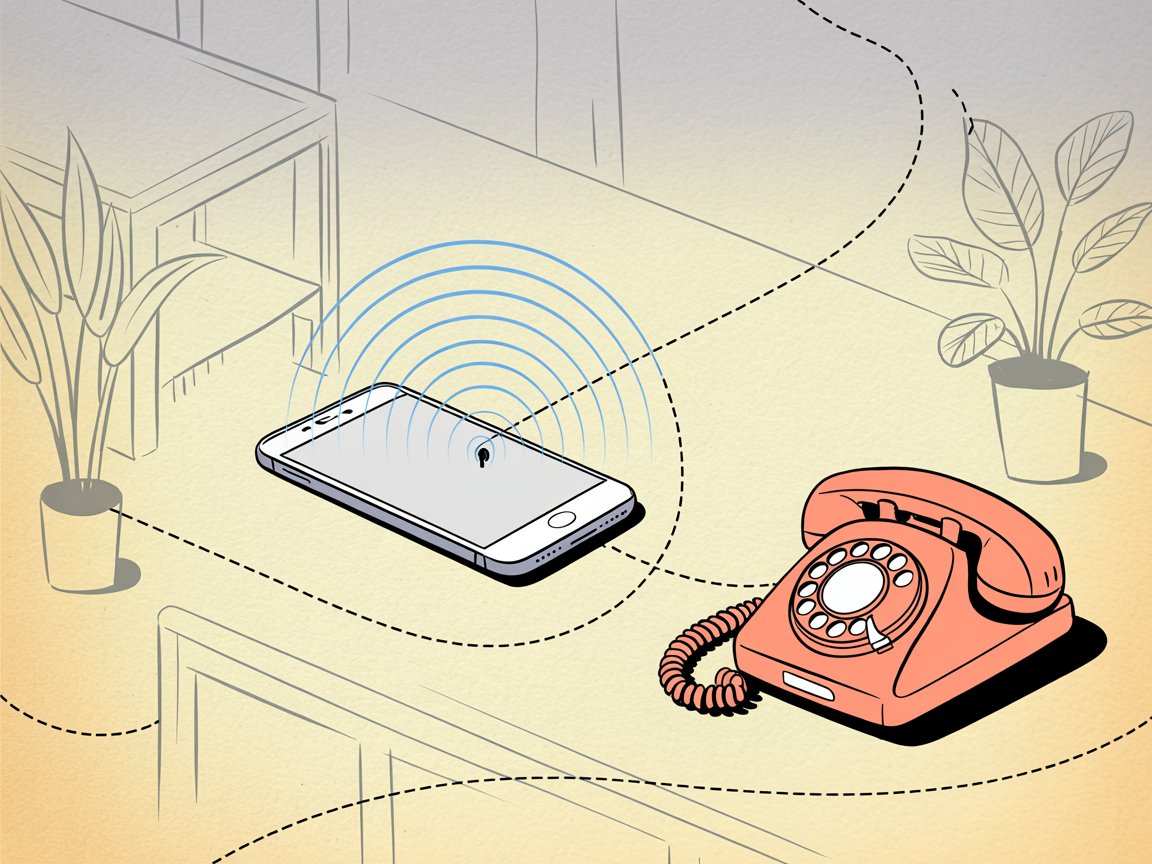
Setting up call forwarding is usually very straightforward. Often just entering a star code on your phone or toggling a setting with your carrier. (If you're unsure how, see our guide on How to Forward Business Calls to an Answering Service for step-by-step instructions with various providers.)
Seamless caller experience. To the caller, this forwarding is invisible. They dial your regular business number. In a few rings (or instantly, depending on your setup), the call redirects to the answering service. A live agent (or AI assistant) at the service answers with your customized greeting, such as "Thank you for calling Miller Plumbing, this is Sarah. How can I help you today?" Exactly as if she were sitting in your office. There's no weird delay or message about being transferred. The result: your customer reaches a real person who sounds like part of your company.
How Call Agents Handle Your Customer Calls#
The agent (or AI) is equipped to help. When the call comes in, the service's system pops up your account details on the agent's screen (for human services) or references your configured script/knowledge base (for AI services). The agent sees information you've provided: your company name, basic info (address, hours, website), the answers to common FAQs you've supplied, instructions for handling different call types, and any specific protocols (like what counts as an emergency call that should be transferred to you immediately).
In essence, the agent has a "cheat sheet" about your business. This enables them to interact with callers as if they were an in-house receptionist fully familiar with your operations.
Call handling and resolution. Based on your guidelines, the service representative will then handle the call appropriately. Common ways an answering service handles calls include:
| Action | What Happens |
|---|---|
| Taking a message | For non-urgent matters or when you're unavailable, the agent collects the caller's name, contact info, and reason for calling. They then send you the message via email or text immediately. You'll always know who called and what they needed, in real time. |
| Transferring the call | If the call meets criteria you've defined (a hot sales lead or an emergency service request), the service can warm-transfer the call to you or a staff member. For example, the agent might put the caller on hold, call your cell to ask if you can take a call from Mrs. Jones about an urgent issue, then connect the two of you. |
| Scheduling appointments | Many answering services can directly book appointments on your calendar if a caller wants to schedule something. The agent might say, "Let's get you on the calendar. I see we have an opening next Tuesday at 10 AM, would that work?" They'll use a shared calendar you've provided access to or an integrated booking system to set the appointment. |
| Answering FAQs | If the caller just has a question ("Do you service my area?", "What are your rates for X?"), the service can be prepared with answers. You can supply a list of frequently asked questions and how to answer them. A well-prepared agent or AI can handle a surprising number of common queries on the spot. |
| Lead qualification | Many services will go beyond just name and number and actually ask a few qualifying questions you've defined. For instance, a law firm might have the receptionist ask what type of case the caller has. A contractor might have the service ask for the customer's address and brief description of their problem. |
| Filtering spam | Top answering services will also help filter out spam or robocalls so you don't get bothered. For example, they might recognize and immediately block obvious telemarketers or scammers. Some services advertise smart spam screening features to auto-detect and hang up on junk calls, so you only pay for real customer calls. |
Throughout this process, the answering service is essentially following the script or rules you set. Good services work closely with you during onboarding to customize exactly how calls should be handled. You can usually provide different instructions for different scenarios (like "If it's a new client looking for a quote, collect their info and tell them I'll call back within an hour," or "If it's a current customer with an emergency, transfer to my cell immediately, otherwise take a message").
This ensures the service acts in a way you would, if you were answering the phone.
After the call: reporting back to you. The final step is getting the information back to you. Answering services will typically send you call summaries or messages right after each call, commonly via email and SMS. For example, you might get a text: "Call from John Smith at 2:17 PM, looking for a quote on landscaping, needs call back. Details emailed."
Many services also have an online portal or dashboard where you can log in to see a call log, play recordings of the calls, and track messages. If the service scheduled an appointment, you'll see it on your calendar instantly. You're kept in the loop in real time.
Some advanced offerings provide call transcripts and recordings for your review, which can be useful for quality control or in case of disputes.
In summary: You forward your number, define your instructions, and then whenever the service fields a call, they either resolve it (taking care of the caller's needs according to your script) or pass the important info to you. Your customers get a helpful human response every time they call, and you get peace of mind (and detailed call info) without personally answering the phone each time it rings.
Live vs AI Phone Answering Services: Which Is Right for You?#
Not all answering services are the same. Broadly, we can categorize them into two main types (with some hybrid blending happening in recent years):
Live Answering Services with Human Operators#
This is the traditional model: real human receptionists answer the calls. These may be called virtual receptionist services, call answering services, or call centers depending on their scope. The key is a live person is on the line with your customer.
Typically, the service will employ teams of trained agents who might answer calls for many different client companies. They follow scripts on their computer screens to handle each call according to the client's instructions. Live services can range from small boutique teams to large call centers handling thousands of calls.
Pros:
-
Human intelligence and empathy for complex conversations or upset callers that need a personal touch
-
Able to adapt on the fly if a caller says something unexpected
-
Many callers feel more comfortable with a live person
Cons:
-
Generally more expensive (you're paying for labor by the minute)
-
Humans can make errors or have inconsistent quality
-
They may handle multiple clients, so occasionally a less dedicated feel if not trained well on your business
-
Limited by staffing; hold times can occur if call volumes spike and agents are busy
AI-Powered Answering Services#
These use technology to handle calls without a live operator, or with minimal human intervention. The classic version is the automated attendant or IVR (Interactive Voice Response) with those phone menus that say "Press 1 for sales, 2 for support..."
But automation has come a long way recently. The newer generation is AI-driven virtual receptionists: an artificial intelligence that can greet callers with a natural-sounding voice and have a conversation to assist them.
Unlike old rigid phone menus, AI receptionists can let the caller speak naturally (like "Hi, I need to reschedule my appointment") and the AI parses the request. These systems can answer FAQs, collect info, and even transfer or book appointments just like a human, using advanced speech recognition and pre-programmed knowledge.
Pros:
-
Cost-effective and scalable (typically much cheaper than paying humans by the minute, and they can handle unlimited concurrent calls with no busy lines)
-
Available 24/7 without overtime or holidays
-
They follow instructions precisely (no forgetting to ask a question)
-
Modern AI can handle routine tasks quickly and sometimes faster than a human
-
For many standard interactions, callers might not even realize they're not speaking to a human, if the AI is well-designed
Cons:
-
Not ideal for very complex or sensitive calls (AI might get confused by heavy accents or unexpected queries beyond its programming)
-
Some callers (especially older generations or upset customers) strongly prefer a human and might be frustrated if they realize it's an automated system
-
An AI can't truly empathize or deviate from its script creatively
-
It's critical that there's an option to route to a live person if needed
Examples: AI answering services are a growing segment in 2025. Companies that provide automated phone receptionists leverage advanced speech tech to simulate a human receptionist. These AI systems can be surprisingly effective for standardized tasks like bookings, basic Q&A, and call routing, and usually come at a lower price point than live services.
Hybrid Answering Services: Best of Both Worlds#
Increasingly, the line is blurring. Some services use a combination: for example, an AI might answer first and handle simple requests, but seamlessly hand off to a human agent if the caller says "I need to speak to someone" or if the AI determines the issue is complex.
Conversely, some primarily human services now use AI in the background to assist their receptionists (for instance, to transcribe calls in real time or provide suggested answers).
The trend is that human-first services are adopting AI to boost efficiency, and AI-first services ensure human backup for edge cases, aiming for the best of both worlds.
When choosing a type, consider your callers' expectations and the nature of your calls. High-touch industries (legal, medical, etc.) or situations requiring a personal touch might lean toward live agents (or at least hybrid with live backup). High-volume, transactional call environments (like appointment confirmations, simple inquiries) might thrive with a well-tuned AI.
Of course, budget plays a role too, as we'll discuss in the pricing section.

The good news: you have options. And no matter which route you choose, even the most basic answering service (human or automated) will likely outperform voicemail in capturing leads and satisfying callers. It's about finding the right fit for your business.
Key Features to Look for in an Answering Service#
Not all answering services offer the same features. When evaluating providers, pay attention to what they can do beyond simply answering the call and saying "I'll take a message."
Here are essential features and value-adds that top answering services provide in 2025:
24/7 availability. This is the big one. Ensure the service can answer calls around the clock, 365 days a year, including weekends and holidays, if you need it. Many services include 24/7 in all plans; others might charge extra for nights/holidays. Having true 24/7 coverage means no matter when a customer calls, they reach a live voice. Even if your business isn't "open" 24/7, it impresses customers to always get an answer.
Custom greeting and scripts. The service should let you fully customize how they answer and what they say. You want your company name pronounced correctly and a greeting in the tone you prefer (friendly and casual vs. formal, etc.). You should be able to provide specific wording for greetings, voicemail (if they ever have to use it), and more. High-quality services work with you to build detailed scripts and call handling instructions so the experience feels on-brand.
Message taking and fast notification. At minimum, the service will take a message and contact info for each caller when you're not available. Look for services that send you those messages immediately via text or email. The quicker you get the info, the faster you can follow up. Many have options to send to multiple contacts (like text the on-call technician and email the office) depending on the scenario.
Appointment scheduling. This is a hugely valuable feature if your business runs on appointments or meetings. Many leading services can book appointments on your calendar in real time during the call. They typically achieve this by integrating with popular calendar systems (Google Calendar, Outlook/Office 365, Calendly, etc.) or using a shared calendar you provide.
When evaluating, ask: Can they set or modify appointments for me? The convenience of having a caller immediately locked into your schedule while on the call (no callbacks needed) can dramatically increase conversion rates.
Pro tip: A prospect is less likely to go competitor-shopping if they've already booked an appointment with you.
Call transfers (patching calls through). If you sometimes want calls routed to you or your staff, check that the service offers call transfer or patching. Most live answering services do, either warm transfer (they announce the caller to you first) or cold transfer. You should be able to give multiple numbers or an on-call rotation. For example, some services will try your cell, then your backup person, etc., until someone picks up, and only take a message if nobody is reached.
Lead qualification and intake. As mentioned, advanced services will not just scribble a name and number. They can ask specific questions of the caller based on your needs. This "intake form" style service is great for professionals like attorneys (collecting case details), contractors (collect project info), etc. Look at whether a service allows custom question lists for your callers and how many details they can capture.
FAQs and customer info. Can the service answer common questions from callers? Many services will do so if you supply a Q&A sheet (hours, basic pricing, service areas, etc.). Some have knowledge base portals where you can input frequently asked questions for agents to reference. AI-based services might ingest your website FAQ or knowledge base so the AI can answer those questions directly.
Bilingual support. If you have a significant number of Spanish-speaking (or other language) customers, look for bilingual answering services. Many live services advertise English/Spanish fluent receptionists. The ability to seamlessly switch languages can be a big plus in serving a wider customer base. Some AI services also support multiple languages or automatic language detection.
Spam blocking and call screening. It's great if the service can filter out robocalls or unwanted sales calls. Many services won't charge you for very short wrong-number or spam calls (like if a call is under 10 seconds it might be free). Some have explicit spam-blocking features that automatically detect common spam numbers. This saves your minutes for real customers.
Integration with your systems. Consider whether the service can integrate with any of your existing business tools. Common integrations include CRM software (logging calls or new contacts into Salesforce, HubSpot, etc.), help desk or ticketing systems (creating a support ticket from a call), and appointment/calendaring apps as noted. Some services provide an API or work with automation tools to connect to thousands of apps.
Call recording and transcripts. For quality assurance or legal reasons, you might want calls recorded. Many answering services offer to record the calls and make them available to you (sometimes as a premium feature). They may also provide transcriptions of calls, either automatically (AI transcribed) or on demand. This can be very useful if you want to quickly skim what was said without listening to audio.
Client web portal or mobile app. Nearly all reputable services have an online portal where you can see your messages, calls, update your instructions, etc. A nice mobile app is a bonus. It can send push notifications for new calls, allow you to return calls with your business caller ID, and more. These tools give you more control and visibility.
No long-term contracts and no hidden fees. The best services these days offer month-to-month plans with no long lock-in, and are upfront about any extra fees. Beware of providers that require an annual contract or have obscure charges. Common fees to ask about: setup fees (some charge a one-time setup, often $50-$100, while many others waive it), holiday fees (a few live services charge a small surcharge for major holidays), overage rates (what it costs if you go over your plan minutes or calls), and any fees for additional services.
Make a checklist of which features you truly need. For instance, if you never schedule appointments, that feature might not justify a higher-priced plan. Whereas if scheduling is critical, you'll focus on that. Prioritize services that excel in your needed areas.
How to Choose the Best Answering Service for Your Business#
With dozens of companies and plans out there, how do you pick the one that's best for your business?
Here are the key factors and steps to consider when selecting an answering service:
1. Decide on outsourcing vs. in-house. First, confirm that outsourcing your calls is the route you want (versus hiring staff or using an in-house solution). For most small businesses, outsourcing to a service is far more cost-effective than employing a full-time receptionist, and it provides greater coverage (multiple agents, 24/7 service, etc.).
But if you only get a handful of calls a week, you might handle them yourself with voicemail as backup. Weigh it out: Do you have enough call volume and missed calls to justify an external service? For many, the answer is yes when you consider even one lost client could mean hundreds or thousands in lost revenue.
2. Live operators or automated AI? Determine if you prefer a human touch or are comfortable with an AI-driven service. This will narrow down your provider options. If your calls often require empathy, complex understanding, or sales skills, a live service might be safer. If they are more straightforward and you need cost savings, AI could be a great fit.
Some providers offer both options, so you can compare. Importantly, if you go AI, check that they have a fail-safe (like forwarding to you or a call center if the AI can't handle something). If you go human, listen to sample calls or demos to judge quality.
Many businesses today actually experiment with AI services first (given the lower cost) and switch to human for certain calls if needed, or vice versa. Decide what aligns with your brand image and customer expectations.
3. Outline your needs and call scenarios. Make a list of what you need the service to do. Questions to ask yourself include:
-
When do I need coverage? (Only after hours? 24/7? Just overflow when my line is busy? Weekends?)
-
What types of calls do I get? (New inquiries, support calls, appointment requests, order placement, etc.) And how should each be handled?
-
Do I need bilingual service?
-
Do I want them to schedule appointments or just take messages?
-
How quickly do I need messages relayed? (Most are instant, but ensure there's no delay or batch delivery that doesn't suit you.)
-
Do I have any industry-specific requirements? (Like HIPAA compliance for medical, legal intake forms, emergency dispatching protocols for service trades, etc.)
Having clarity on these will help you ask the right questions and find a service that ticks all the boxes.
4. Set a budget (but look beyond price). Figure out roughly how much you're willing to spend per month for call answering. Plans are usually priced by usage (minutes or number of calls), but you can estimate: like "I don't want to spend more than $200 a month."
But don't choose solely based on the lowest price. As with many services, you often get what you pay for. Cheaper services may have less trained operators or fewer features.
Think of an answering service as an investment that should pay for itself by capturing business you'd otherwise lose. For perspective: if a $150/month service helps you convert even one extra customer worth $500, it's worth it.
5. Research providers and read reviews. Once you have a shortlist, do your homework on each. Visit their websites to see features and pricing transparency. More importantly, read customer reviews and testimonials on platforms like Clutch.co, Trustpilot, Google, or others. Look for patterns: do people complain about missed calls, billing issues, rude agents, etc., or do they rave about professionalism and reliability?
Also note things like: how long have they been in business (a longer track record can be reassuring), what notable clients they have (if any similar to your industry), and if they have case studies.
A great tip is to ask for references. A quality answering service should be willing to connect you with a happy client for a candid conversation. Also, many have recorded sample calls or will do a live demo for you.
Don't be afraid to test them: call their sales or support line and see how they answer (this is literally how they'd be answering for you!). If you experience long hold times or unhelpful reps during the sales process, that might be a red flag.
6. Compare features side by side. Create a simple comparison of your top 2-3 choices on key features. For example:
| Feature | Service A | Service B | Service C |
|---|---|---|---|
| 24/7 coverage | Yes (all plans) | Yes (only on premium) | Yes (all plans) |
| Bilingual (English/Spanish) | Yes, included | No | Yes, +$50/mo extra |
| Appointment Scheduling | Yes (Google/Outlook) | No | Yes (via Calendly link) |
| Transfers to my cell | Yes, unlimited | Yes, $1 per transfer | Yes, unlimited |
| Custom scripting | Full script + FAQs | Basic greeting only | Full script |
| Free Trial | 7 days | No (money-back 14 days) | 14 days |
| Price for ~100 calls | $$ | $$$ | $ |
| Notable Pro | Dedicated receptionists team | Very low cost | Integrates to my CRM |
| Notable Con | 1-year contract required | No scheduling feature | Small company, fewer reviews |
This kind of table (even if just in your head) can clarify which service aligns best with your needs.
7. Consider specialization and experience. Does the service have experience in your industry or call type? Some advertise industry specialties: like "We specialize in legal and have many law firm clients," or "We handle medical office calls with HIPAA training." If your calls involve technical or sensitive matters, an industry-aware service is beneficial.
They'll already know, for example, how to pronounce certain terms or the urgency of a patient call vs. a general inquiry. During your evaluation, ask if they have clients in your field and how they handle those.
8. Test their customer service. Ironically, the way an answering service treats you as a customer is telling of how they'll treat your callers. Are they responsive and helpful when you inquire? Do they customize a plan for you or just push a one-size package? Do they clearly answer your questions about how they operate?
Support for you is key. You want a partner that will adapt to your changing needs and be reachable if something goes wrong. Look for 24/7 support availability (especially if you're using them after hours).
9. Clarity on terms: month-to-month vs. contract. Favor services that offer flexible, no-contract plans unless you're certain you want a long-term lock-in. Month-to-month means if they underperform, you can leave without penalty. Check if they have a trial period or money-back guarantee. For instance, some services provide a 7-day free trial or a 14-30 day money-back period so you can try risk-free.
Be cautious of any that require a several-month commitment up front. Also verify how easy it is to cancel or change plans.
10. Try it out! Once you've chosen a service (or narrowed to two), the best way to know if it's right is to test it with your own calls. Sign up for the free trial if offered, or start with a lower-tier plan. Forward your phone and maybe have a friend or family member make some test calls posing as customers.
Experience the interactions and see the messages you get. Evaluate: Did they follow your script properly? Was the caller experience smooth? Did you get the correct information in the message? If something's off, work with the service to tweak your instructions or see if it improves.
Most services will adjust scripts based on your feedback quickly. If after a trial you're not happy, it's easier to walk away and try an alternative. It's not uncommon to try one service, then decide to switch to another that fits better. The key is you'll eventually find the right one that you trust with your calls.
In essence, choosing an answering service is about balancing cost, capabilities, and trust. You want a service that fits your budget yet represents your business well. Take your time to vet them, because this service will often be the first impression new customers get of your company.
Pick a partner you feel confident will treat your callers with the same care and professionalism you would.
How Much Does a Phone Answering Service Cost?#
Cost is a major consideration, and pricing models for answering services can initially seem confusing. Let's demystify what you can expect to pay in 2025 for phone answering, and how different services charge for their work.
Common Pricing Models for Phone Answering#
Most answering services charge in one (or a mix) of three ways:
Per minute. This is the most prevalent model for live answering services. You purchase a bundle of minutes per month (like 100 minutes, 500 minutes, etc.), and the service tracks the time their agents spend handling your calls. If you go over your included minutes, you pay an additional per-minute rate.
Time is typically measured in increments (some bill per second, but many round up to the next 30-second or 1-minute increment). For example, a plan might include 100 live answer minutes for $130/month, with extra minutes at $1.30 each.
Per call. Some services (especially AI-based ones) charge by the number of calls handled, regardless of length. For instance, an AI service might charge $25 per month for up to 30 calls, or a human service might charge $X per call answered (with maybe tiers of number of calls).
Per-call can benefit you if your calls tend to be long, but it could be costly if you get many very short calls (like a bunch of 10-second wrong numbers could each count as a "call"). Typically we see per-call pricing more with AI services; most human services avoid per-call because call length (and thus agent work) can vary widely.
Monthly flat rate (unlimited). A few providers offer an unlimited calls or minutes plan for a flat monthly fee. This is more common with AI services (since their marginal cost per call is low). For example, some AI receptionist services offer unlimited usage for around $100-$300/month as a competitive edge.
It's rare for human-staffed services to offer true unlimited plans because of labor costs, but some might label a very high minute plan as "unlimited" with fair-use clauses. Always read the fine print; "unlimited" might have caveats if one were to receive abnormally high volume.
What You'll Actually Pay: Price Ranges#
The cost can vary drastically by provider and whether it's human or AI:
For human answering services, you'll often see plans like:
-
~$50-$100 per month for a very basic plan (which might include as few as 20-50 minutes of live answering).
-
Mid-tier plans around $150-$300/month for a few hundred minutes.
-
Larger plans 500+ minutes can run $400-$900+ per month.
The per-minute equivalent cost generally ranges from about $1.00 to $3.00 per minute depending on plan size and provider. Smaller plans have a higher effective per-minute rate (due to base fees).
Keep in mind these are for time the agent is on the phone with callers. If an agent handles a 2-minute call, that deducts 2 minutes from your plan.
For AI-based answering services, pricing is generally lower. Examples:
-
Upfront monthly fees can be as low as $20-$50 for basic packages.
-
Some AI services scale by calls or offer unlimited calls for a flat rate.
-
Per call costs for AI are often effectively less than $1 per call on larger plans. Compare that to a human service where one call could easily cost $2-$5 (depending on length). This is where AI shines in cost efficiency.
-
There may be add-on fees for certain AI features (some might charge extra for integrations or additional languages, etc., though many include everything in one price).
Hidden Fees to Watch Out For#
Make sure you understand the full billing structure:
-
One-time setup fee: Some services charge a setup fee (typically $50-$100) to create your account, record greetings, etc. Many others advertise "no setup fee." It's often negotiable or waived during promotions.
-
Overage charges: If you exceed your plan's minutes or calls, you pay more. These rates can be relatively high (like $1.50 to $2.50 per minute extra on human plans, or a flat $X per extra call on AI plans). It's fine to occasionally go over, but if you consistently go over, it's cheaper to upgrade to the next plan.
-
Holiday or after-hours surcharges: Some older-school answering services charged extra for calls taken on major holidays or outside normal business hours. Most modern services include 24/7 in their pricing, but a few might still list a small surcharge for holidays (say, $5-10 per holiday). Clarify this so you're not surprised.
-
Transfer/patch fees: Check if transferring a call to you counts against minutes (usually yes, the time the operator spends ringing and talking to you will count) or if there's a per-transfer fee.
-
Messages sent via SMS: Some services charge a few cents for every text message notification they send you. If you plan to get SMS alerts for each call, see if that's unlimited or incurs a fee.
-
Extra services: If you opt for additional services like outbound calling campaigns, custom reporting, integration setup, etc., those might cost extra or only be in higher plans.
Is Cheaper Always Better? Cost vs Quality#
It's tempting to just go with the cheapest option, but consider the impact. The range in quality can be significant. Some ultra-low-cost services (or plans) might mean:
-
Less training for receptionists (they might just take basic messages and nothing more)
-
Higher likelihood of non-U.S. or non-native English agents if that matters to you
-
Potentially more robotic script reading or mispronunciations
-
Fewer features (maybe they won't schedule appointments or make effort on FAQs)
On the flip side, paying a premium gets you highly polished service but only you can decide if that ROI is worth it.
Many businesses find a middle-ground provider that offers all the needed features at a moderate price. It's often about finding the plan that aligns with your call volume. You don't want to be in constant overage (that can get very expensive), but also don't want to overbuy minutes you'll never use.
Real-World Cost Examples#
• A small business that gets ~50 calls a month, averaging 2 minutes each (100 minutes total), might choose a ~100-minute plan. They could pay around $120-$150/month with a mid-range live service (roughly $1.20-$1.50/min). Or they might pay around $50-$80 with an AI service for that number of calls. The live service gives human touch, the AI saves ~$70+ in cost.
• A busy company with lots of short calls (say 300 calls of 1 minute each, or 300 minutes) might go for a 300-minute live plan, maybe $300-$400/mo on a cost-efficient provider (around $1.00-$1.30/min). If those 300 calls were handled by AI, they might pay less with an AI service's flat rate, potentially saving quite a bit.
• For heavy usage, like 1000 minutes, expect something like $1k+ per month for humans. AI might still be a few hundred at most.
Is a Phone Answering Service Worth the Cost?#
You can find an answering service at almost any price point, from under $50 to several thousand per month, depending on needs. Most small businesses will likely spend somewhere between $100 and $400 per month for reliable call answering, which in context is often well worth the business it brings in.
Always calculate the cost of a missed opportunity. If one missed call could be a $500 job, even a $300/mo service that saves a couple of those pays for itself.
When evaluating cost, also factor in what you're saving: the cost of hiring staff (even a part-time receptionist costs far more when you include wages, benefits, etc.), the cost of lost customers, and your own time. Many business owners find that the answering service frees them up to generate more revenue in other ways, easily covering its fees.
Lastly, don't hesitate to discuss pricing with the providers. Many have unadvertised plans or will customize a package. For example, if you find yourself in between standard plans, they might adjust minutes or calls for you. Some will price-match competitors or give discounts if you prepay annually (though be careful locking in if you haven't proven the service yet).
The market is competitive, so use that to your advantage to get a fair deal.
2025 Trends: The Future of Phone Answering Services#
The landscape of phone answering services is evolving rapidly. As we sit in 2025, a few key trends are shaping the future of this industry:
AI Receptionists Are Going Mainstream#
We've discussed AI-powered answering extensively, and indeed, 2024-2025 has seen an explosion of AI receptionist services. Advances in natural language processing mean AI can converse more fluidly than ever. Businesses are increasingly adopting AI for after-hours or overflow call handling to save costs.
According to market data, the AI segment of call answering is expected to grow dramatically in the next few years.
What this means: even traditional live answering providers are incorporating AI to stay competitive. We anticipate more hybrid offerings. For instance, an AI might greet the caller and handle routine requests, but a human takes over if the AI gets confused or if the caller specifically requests a person.
From a small business perspective, this trend means more affordable options and flexibility. If you haven't considered an AI solution, it's worth keeping an eye on, even if you prefer humans now. The technology is improving literally month by month.
AI can also work alongside your human service, like using AI to transcribe and summarize calls that the human agents handled, making it easier for you to review interactions.
Deeper CRM Integration and Automation#
Modern answering services aren't operating in a silo anymore. They're connecting with the rest of your business software. We see deeper integrations with CRMs, scheduling software, billing systems, and more.
For example, an answering service might directly log a new lead into your Salesforce or trigger a follow-up email via MailChimp after a call. This "connecting of the dots" helps businesses respond faster and eliminates manual data entry.
When choosing a service, the ability to integrate could save you significant time. Expect future services to advertise integration libraries and even AI that can update multiple systems during a call ("schedule an appointment and also create a ticket in our support desk").
Industry-Specific Answering Services#
As the industry grows, some providers specialize by vertical. In the future, you might see more answering services that brand themselves as experts in specific industries like "dental office calls" or "e-commerce order hotlines." They will train agents with industry knowledge and perhaps integrate with industry-specific software (imagine an answering service that can directly schedule patient visits into a dentist's practice management system).
Also, services are providing more personalization features. Like allowing clients to choose from multiple receptionist "voice" profiles, or if AI, different voice options and accents to match your brand image. Bilingual and even tri-lingual support might expand as businesses globalize.
Call Analytics and Performance Insights#
The more advanced services are starting to not just handle calls, but help you analyze call trends and performance. Dashboards might show you things like call volume by time of day, missed call rates (if any), conversion rates of calls to appointments, etc.
Some services provide monthly reports or even AI-driven insights (like identifying that many callers keep asking a question that you haven't provided an FAQ for, indicating you should update your script or website).
These analytics can be incredibly useful to improve your business operations. For instance, if you see most calls coming in Monday mornings, you might adjust staffing or your own schedule to be available then if needed.
Customers Expect Instant Answers#
Customers continue to get more accustomed to instant service. In the context of phone answering, this means answer times need to be very quick. Many services answer within a few rings, but the expectation is nearing immediate pickup.
Services will tout low average ring times or zero hold time. They will likely also incorporate more omnichannel features, meaning, if a customer calls and then texts, the service might handle both. Some answering services are expanding into handling texts, web chats, and Facebook messages in addition to calls (essentially becoming a full communications receptionist).
This trend recognizes that customers might reach out in various ways, and a unified service can ensure all channels are covered with a consistent approach.
More Competitive Pricing#
With AI driving costs down, we might see traditional services adjusting pricing or offering hybrid plans (maybe a cheaper rate for using AI after hours and humans during business hours, for example). The competition may lead to more value-add in packages (like including a certain number of outbound calls or including chat answering at no extra charge).
For consumers of these services, this is good news: more competition and tech usually lead to better pricing and features over time. It's worth reviewing your service's offering every year or so to see if there's a new plan that gives you more for the same cost.
Human Touch Remains Valuable#
Despite all the AI talk, it's clear that human service isn't going away. In fact, it becomes a differentiator: many clients and customers still crave talking to a real person. The highest-rated answering services in reviews are often those where the receptionists truly sound like part of the client's team and delight the callers.
Empathy, active listening, and critical thinking are human strengths that AI hasn't fully matched. The trend we anticipate is answering services focusing even more on receptionist training, quality monitoring, and professional development to ensure their human agents provide top-notch experiences (because rote tasks might be taken over by AI, freeing humans to handle the nuanced conversations).
So the human services will aim to become more "premium" in feel, while AI takes on the bulk of routine work.
In summary, the future of phone answering services looks to be a blend of smart automation and high-touch human service. As a business owner, you'll have even more tools at your disposal to make sure every customer communication is handled promptly and effectively.
It's an exciting time, because even the smallest business can leverage tech and professional services to offer customer service on par with large enterprises.
How Eden Helps Businesses Answer Every Call#
At Eden, we've built an AI phone receptionist specifically designed for small and medium-sized businesses across the United States. We understand the pain points you face: missed calls during busy times, after-hours inquiries that go to voicemail, and the challenge of providing professional phone coverage without hiring full-time staff.
What Makes Eden Different from Other Answering Services#
24/7 AI Answering. Our AI receptionist answers every call, day or night. Whether it's a customer calling at 2 PM on a Tuesday or 2 AM on a Sunday, Eden picks up and provides a natural, conversational response. No more voicemail. No more missed opportunities.
Bilingual Support. We offer flawless English-Spanish switching, ensuring you can serve a broader customer base without hiring bilingual staff. Our AI detects the caller's language and responds accordingly.
Smart Spam Blocking. Not all calls are created equal. Eden's IntelliSpam filtering automatically detects and blocks robocalls and spam, so you only pay for real customer calls. Your minutes go to people who matter.
Appointment Scheduling. Our Pro plan integrates directly with Google Calendar and Microsoft Outlook Calendar to book appointments in real-time during calls. No more phone tag. Callers can schedule while on the line, dramatically improving conversion rates.
Call Transfers. Need urgent calls routed to you or your team? Eden can transfer calls based on your rules. Whether it's warm transfers (we announce the caller first) or routing to an on-call technician, we make sure critical calls reach the right person.
Five-Minute Setup. Seriously. Pick a local number, paste your website (so Eden can learn about your business), and forward your line. You can be up and running in less time than it takes to make coffee.
Transparent Pricing. We offer three plans:
| Plan | Price/Month | Minutes | Best For |
|---|---|---|---|
| Plus | $39 | 200 | Solo or very small teams that need messages captured |
| Pro | $99 | Unlimited | Busy shops that want booking and transfer capabilities |
| Ultra | $299 | Unlimited | Multi-location or high-volume businesses |
Plus includes bilingual support, spam blocking, and SMS/email summaries. Pro adds calendar integration and call transfers. (Note: ULTRA plan features like advanced knowledge base and customer memory are coming soon.)
Which Businesses Use Eden?#
We work with small-to-medium businesses across the United States in industries like:
• Plumbing, HVAC, and electrical contractors
• IT support and managed service providers
• Landscaping and lawn care
• Gyms and fitness studios
And many more. Please note: We don't serve restaurants or healthcare providers (as we don't have HIPAA accreditation).
How to Get Started with Eden#
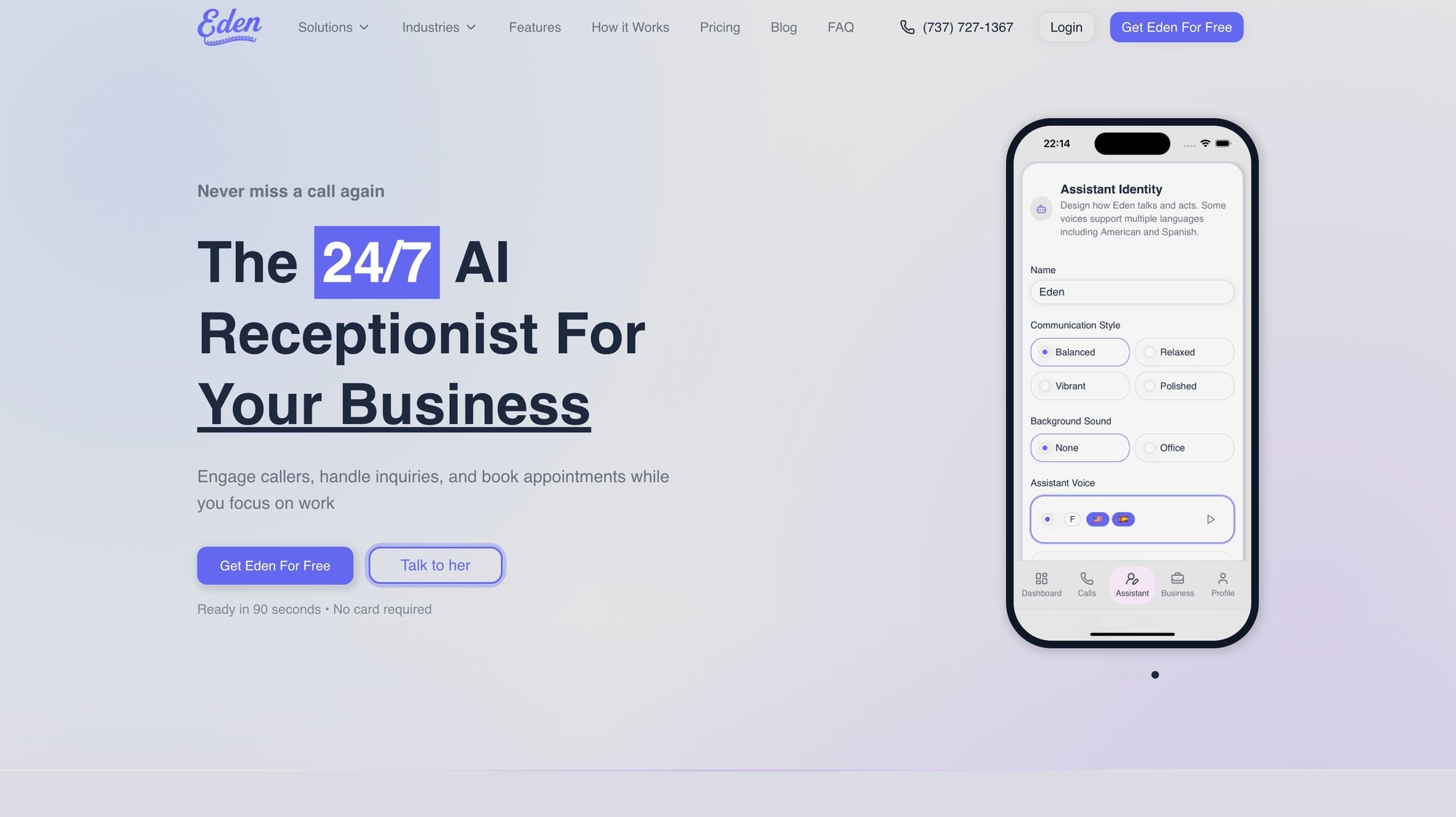
If you're tired of missing calls and losing business to voicemail, Eden offers a simple solution. Our AI receptionist works as an extension of your team, capturing leads, answering questions, and booking appointments while you focus on serving customers.
Visit ringeden.com to start your free trial and see how Eden can transform your phone answering.
Common Questions About Phone Answering Services#
What is a phone answering service?#
A phone answering service is a service that manages incoming calls for your business when you or your staff can't. A real person or AI system answers your phone lines professionally, greets callers in your business name, takes messages, schedules appointments, transfers calls, or assists customers according to your instructions. It's essentially a virtual receptionist or off-site front desk that ensures no customer call goes unanswered.
How much does a phone answering service cost?#
Costs vary widely depending on whether you choose a human or AI service and how many calls or minutes you need. Human answering services typically charge per minute, with plans ranging from about $50-$100/month for 20-50 minutes up to $400-$900+ for 500+ minutes. The per-minute rate usually falls between $1.00 to $3.00. AI-based services are generally cheaper, with some starting as low as $20-$50/month for basic packages and offering unlimited plans for $100-$300/month. Most small businesses spend between $100-$400 per month for reliable call answering.
What's the difference between live and AI answering services?#
Live answering services use real human receptionists who answer your calls. They offer empathy, adaptability, and a personal touch but cost more (typically $1-$3 per minute). AI answering services use artificial intelligence to handle calls with natural-sounding voices and conversational ability. They're more cost-effective (often under $1 per call), available 24/7 without labor costs, and can handle unlimited concurrent calls. But AI may struggle with very complex or sensitive situations. Many businesses use hybrid approaches, with AI handling routine calls and humans available as backup.
Can an answering service schedule appointments for my business?#
Yes, many modern answering services (both human and AI) can schedule appointments directly on your calendar. They typically integrate with popular calendar systems like Google Calendar, Microsoft Outlook, or Calendly. When a caller wants to book an appointment, the service can check your availability, offer time slots, and lock in the appointment in real-time, all during the call. This eliminates phone tag and dramatically improves conversion rates because prospects don't have to wait for a callback.
Will callers know they're not speaking to my staff?#
Not necessarily. Good answering services (both human and AI) are designed to sound like part of your team. They use your customized greeting, answer with your business name, and follow your scripts. To the caller, it should feel like they're speaking with someone in your office. Live services train receptionists to represent your business professionally, while AI services use natural language processing to have human-like conversations. That said, some callers may prefer to speak with a human if they realize they're speaking with AI, which is why many AI services offer options to transfer to a live person.
How quickly can I set up a phone answering service?#
Setup times vary by provider and service type. AI-based services like Eden can be set up in as little as five minutes: you pick a phone number, provide your website or business information, and set up call forwarding. Human answering services may take a bit longer (typically a few hours to a day) as they need to create your account, record custom greetings, train agents on your business, and configure your script. Most services work to get you operational within 24-48 hours of signup, with many offering same-day setup for urgent needs.
What happens if the answering service can't handle a call?#
Reputable answering services have protocols for calls they can't handle. Human services will typically take a detailed message and flag it as urgent or complex for you to handle personally. AI services usually have a fallback option: they might transfer the call to you or your team, connect to a live backup agent, or take a message explaining that you'll receive a priority callback. When setting up your service, you should specify how to handle complex situations, emergencies, or calls that fall outside normal scripts.
Do answering services work with my existing phone system?#
Yes, answering services work with virtually any phone system through call forwarding. You simply forward your business line to the answering service's number using your phone carrier's forwarding feature. This works with landlines, cell phones, VoIP systems (like RingCentral or Google Voice), and other phone setups. The forwarding is invisible to callers (they dial your regular number and the call routes to the answering service). You can set up conditional forwarding (only forward when you're busy, after hours, or if not answered after X rings) or forward all calls directly.
Can I customize what the answering service says to my callers?#
Absolutely. Customization is a core feature of quality answering services. You can provide custom greetings, scripts for different scenarios, answers to frequently asked questions, and specific instructions for handling different types of calls. You can specify your company name, how it should be pronounced, your preferred tone (formal vs. friendly), what information to collect from callers, when to transfer calls, and much more. Good services will work with you to refine these scripts based on feedback and actual call performance.
Final Thoughts: Stop Missing Calls Today#
A phone answering service can transform how your business handles customer calls. It ensures that whether a customer calls at noon on a weekday or midnight on a Sunday, they reach a friendly voice and get the help they need. In an era when customer experience is often the differentiator between you and your competition, this kind of responsiveness is invaluable.
We've covered the ins and outs: from what answering services do, to why they matter (never miss a lead!), how they operate via call forwarding, the differences between human and AI options, key features to seek out, how to vet providers, and what it will cost you. Armed with this knowledge, you can approach choosing an answering service with confidence.
Remember, the best answering service is the one that aligns with your business's needs and values. It should feel like a seamless extension of your team. When you find the right partner, your customers won't even realize that helpful receptionist isn't sitting in your office, and they'll be impressed at the consistently professional treatment they receive.
Meanwhile, you'll enjoy more freedom and focus, knowing that important calls are in good hands.
In a world where nearly 62% of customers will hang up if a call isn't answered promptly (and where 85% of them won't leave a voicemail), investing in a quality answering service is investing in capturing business that might otherwise slip away.
Whether you choose a live receptionist service for that personal touch or an AI-driven service for cost efficiency (or a combination), you're taking a proactive step to elevate your customer service.

No more worrying about the phone ringing at inconvenient times, or potential clients lost to silence or voicemail. With the right phone answering service, every call becomes an opportunity, and your business won't miss its chance to shine.
Don't let another call (or customer) fall through the cracks. The phone is still ringing; make sure someone great is there to answer.
Ready to Transform YourCustomer Experience?
Join hundreds of businesses using Eden AI to handle calls, book appointments, and provide 24/7 customer support.