How to Qualify Leads Over the Phone (Without Being Pushy)
Master phone lead qualification without the sales pressure. Use open-ended questions and active listening to qualify leads professionally.
January 28, 2026
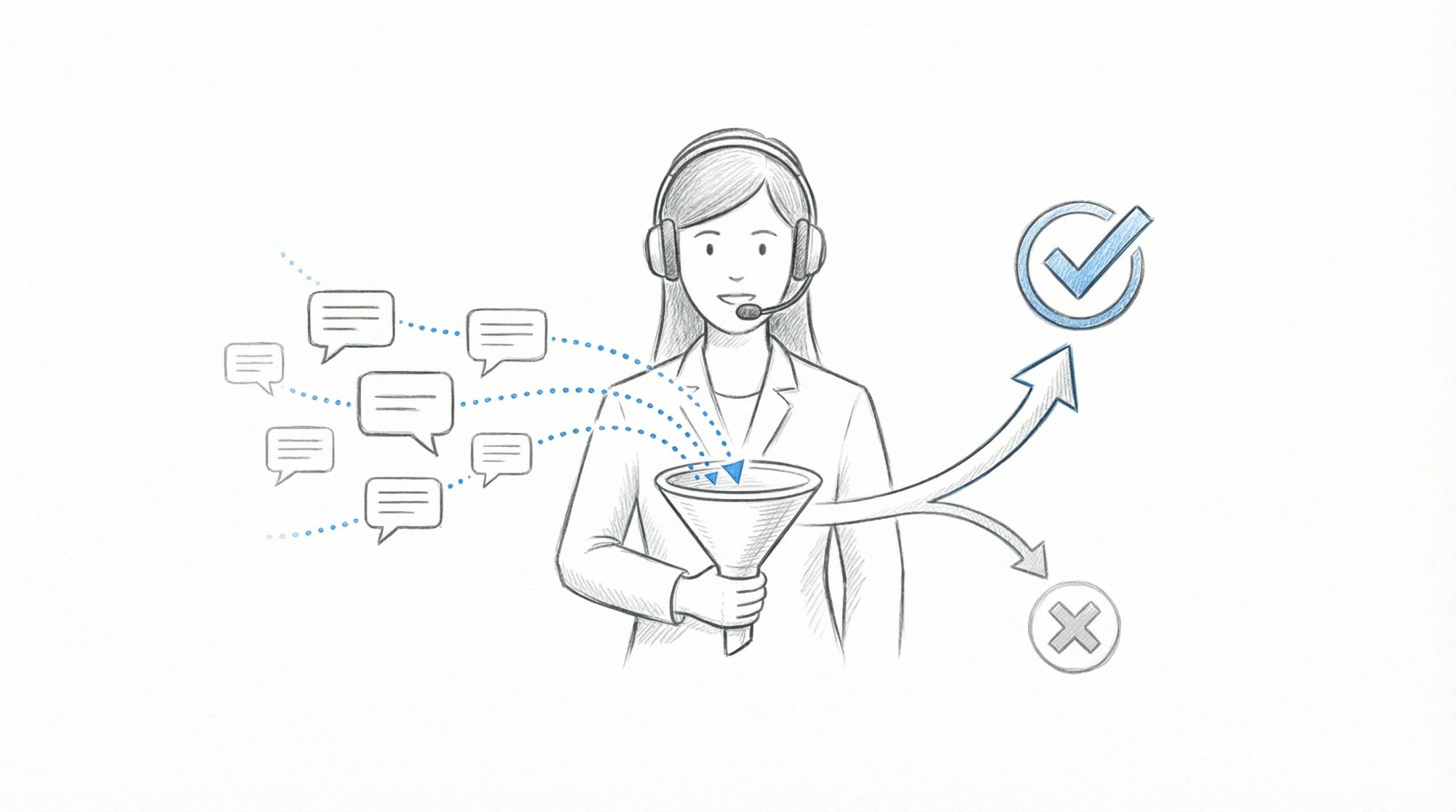
You're on a call with a potential customer. They reached out, they're interested, but you need to figure out if they're actually a good fit. The problem? You don't want to sound like one of those pushy salespeople who makes everyone cringe.
Research shows that half of B2B buyers think salespeople are too pushy, and 61% say it actively hurts the deal. That's a problem because qualifying leads is critical. Studies indicate that 67% of lost sales happen because leads weren't qualified upfront.
The good news? You can gather all the information you need without being salesy. You just need the right approach.
Why Phone Lead Qualification Still Works Better Than Email#
The phone is still one of the fastest ways to qualify a lead. A live conversation lets you gauge interest, clarify needs, and build rapport way better than email ever could.
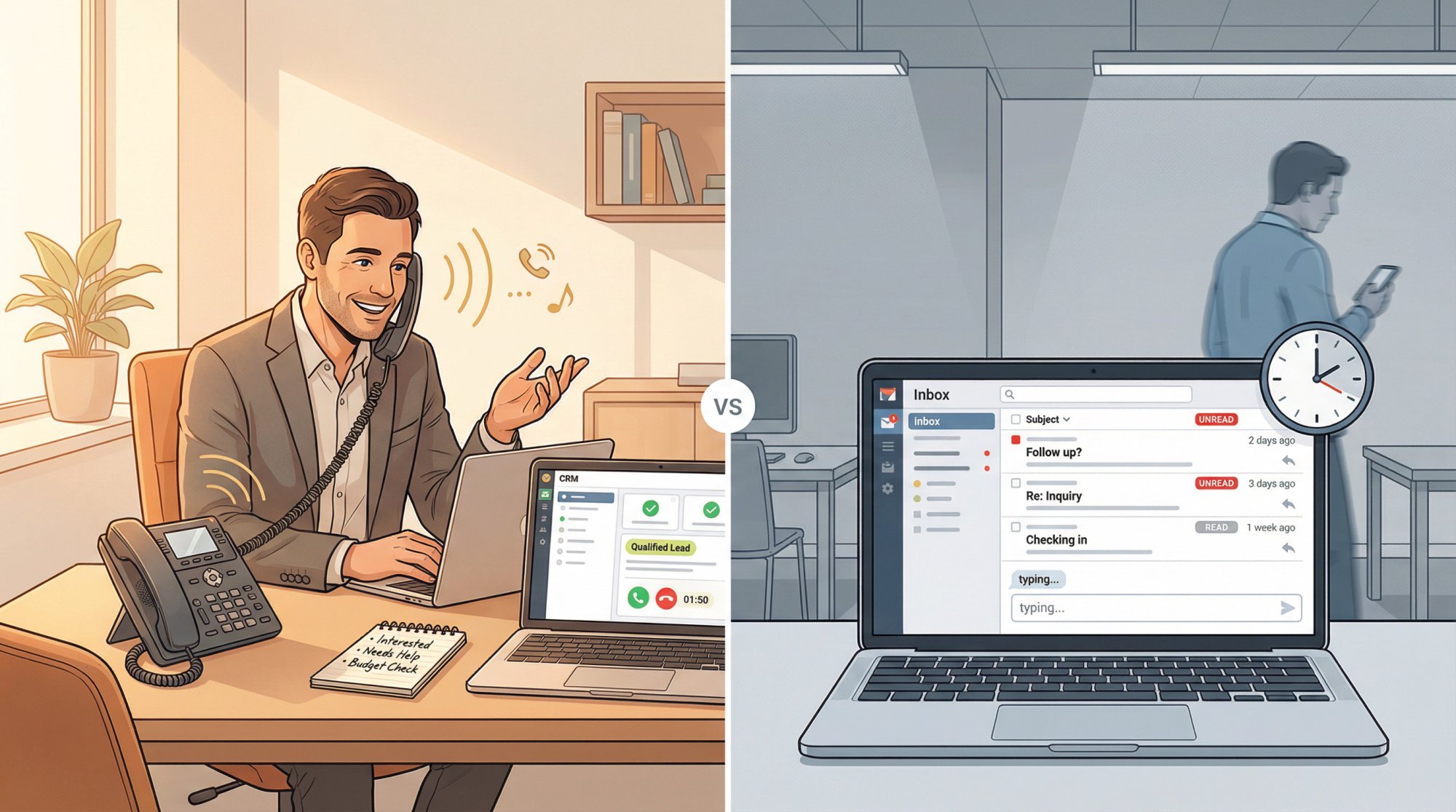
But there's a catch. 84% of buyers have had negative experiences with pushy salespeople. So the bar is high. You need to be helpful, empathetic, and conversational. Think consultant, not closer.
The mantra? Don't sell, qualify. Your job isn't to close a deal on this call. It's to figure out if there's a real opportunity here.
Trying to sell during qualification is counterproductive and can backfire. When you get lead qualification right, everyone wins. Qualified leads move forward, unqualified ones don't feel pressured, and you spend your time where it matters. This is especially critical for small business phone systems where every call counts.
How to Prepare for Qualification Calls: The Right Mindset#
Do your homework. If this is a scheduled call or you're calling them back, spend two minutes checking what you already know. Look at your CRM notes, review their form submission, check out their website or LinkedIn. Coming in with background knowledge shows professionalism and saves time. Plus, you won't ask questions they already answered, which just makes you look disorganized.
Preparation isn't just about information, though. It's about mindset. You're a consultant trying to diagnose a problem, not a salesperson trying to force a square peg into a round hole. This shift matters because it changes your entire approach. You'll ask better questions. You'll listen more. And you'll be willing to walk away if it's not a fit.
(Ironically, when you're not focused on closing, prospects trust you more. Which often leads to more sales anyway.)
How to Build Rapport in the First 30 Seconds of a Call#
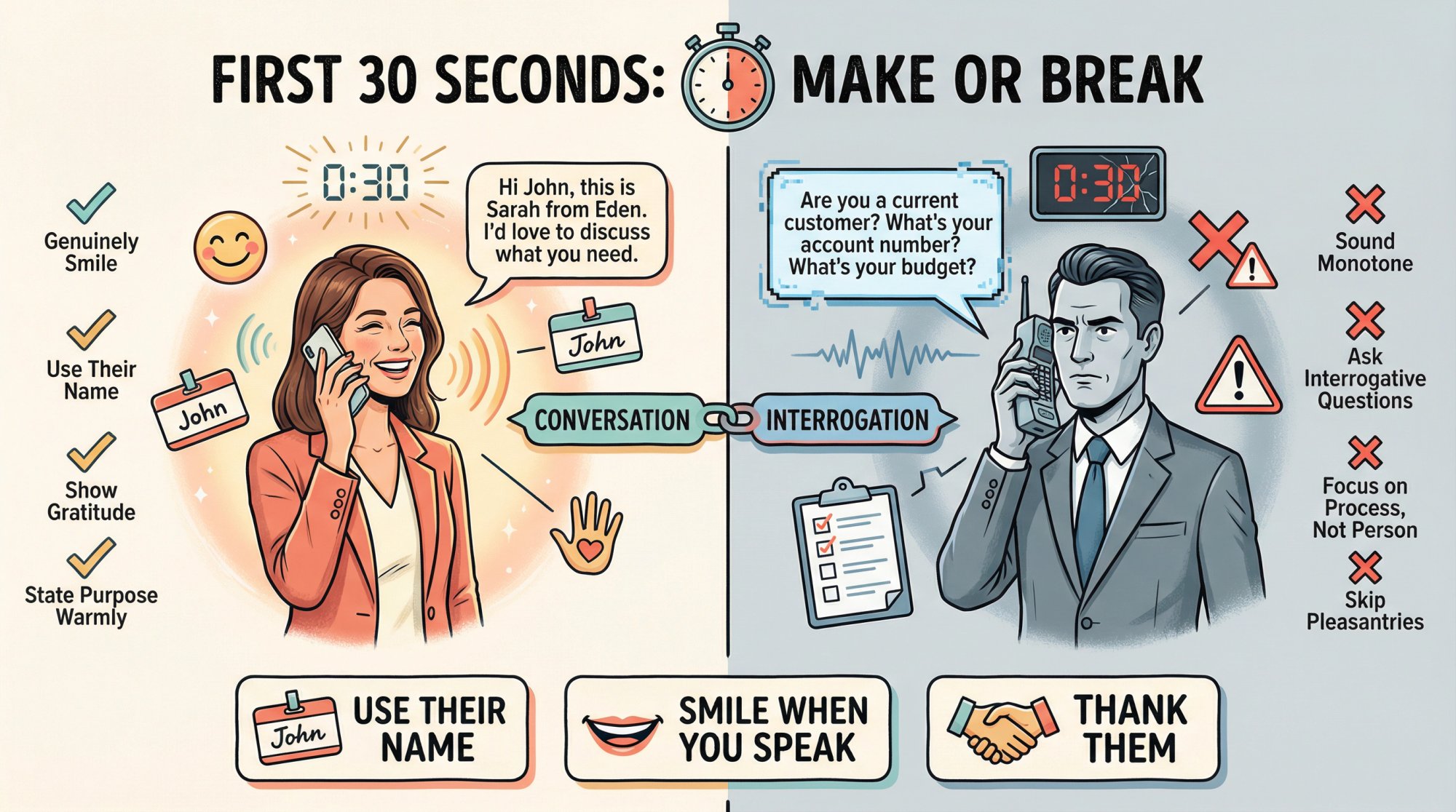
First impressions happen fast. You want to sound warm, professional, and genuinely helpful right from the start.
For inbound calls, try something like:
"Hi, thanks for calling Eden! This is Sarah, how can I help you today?"
For outbound calls, try:
"Hi John, this is Sarah from Eden. I understand you reached out about our AI receptionist service. I'd love to discuss what you need."
Notice the tone? Inviting, not aggressive. You're signaling conversation, not interrogation.
A few quick wins here:
• Use their name (and introduce yourself by name)
• Smile when you speak (yes, they can hear it)
• Thank them for taking the time to connect
What you don't want is to sound robotic. Training experts warn against launching into checklist questions in a monotone voice. Questions like "Are you a current customer? What's your account number? What's your budget?" have zero empathy. A robot could handle that, and the caller will know you don't actually care.
Instead, make it a dialogue. Let them respond to your greeting. Listen to what they say. Acknowledge it: "Great, I can definitely help with that," or "Nice to meet you, John."
If they're chatty and mention something casual ("I'm calling from Texas and it's hot today"), you can briefly acknowledge it ("Oh, I can imagine, I'm in Phoenix so I feel you!"). Use judgment based on their vibe, but the goal is conversational professionalism. Warm, focused, and human.
Best Questions to Ask When Qualifying Phone Leads#
This is where the magic happens. You need to understand what they need, why they need it, and what success looks like for them. The best tool? Open-ended questions that get them talking.
Try questions like:
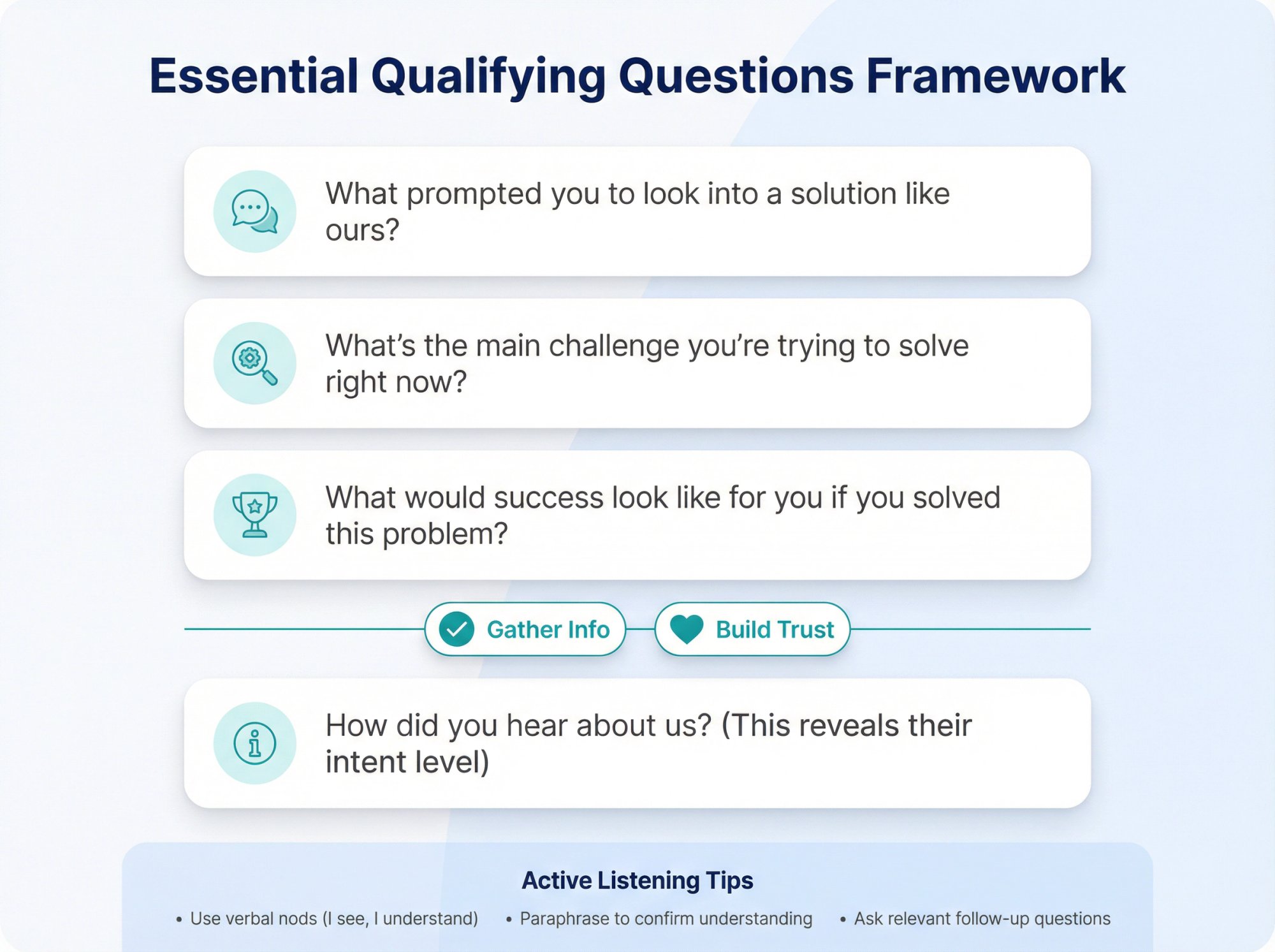
→ "What prompted you to look into a solution like ours?"
→ "What's the main challenge you're trying to solve right now?"
→ "What would success look like for you if you solved this problem?"
→ "How did you hear about us?" (This reveals their intent level)
These questions accomplish two things. First, you gather crucial information. Second, you create space for the prospect to feel heard. Research emphasizes that great discovery calls are "insight factories" where reps ask thoughtful questions and truly listen. Open-ended questions help you uncover real problems and build trust simultaneously.
How to Practice Active Listening on Sales Calls#
Active listening is the difference between qualification and interrogation. When they answer, you need to absorb what they're saying and react to it.
Show you're listening:
-
Use verbal nods: "I see," "I understand"
-
Paraphrase to confirm: "So it sounds like your current system is causing downtime, is that right?"
-
Ask follow-up questions: "How long has that been an issue?"
Studies found that 69% of buyers say the quickest way to gain their interest is to listen to their needs. Most people love being heard. By letting them talk through their challenges, you're already standing out.
Take notes (mental or written) on:
-
Specific pain points they mention
-
Numbers or facts ("we have 5 employees," "our contract ends in 3 months")
-
Emotional tone (frustrated? excited? just browsing?)
These clues tell you if this lead is real. And they help you tailor what you say next.
A few pro tips:
① Don't rapid-fire questions. Give them space to explain. Scripted questions are fine as a guide, but you need to adjust on the fly based on their answers.
② Start broad, then narrow. Begin with general questions before drilling into specifics like budget or timeline.
③ Listen for the real pain. Sometimes they'll reveal their primary need immediately. If they say "We're struggling to answer calls after hours," that's gold. File it away.
④ Watch for deal-breakers. Maybe they need a service in a region you don't cover, or a feature you don't have. Don't ignore those signs.
By the end of this discovery phase, you should know what they need, why they need it, and how serious they are. That's your foundation for everything that comes next.
How to Ask About Timeline Without Pressuring Prospects#
Timing matters. A prospect who needs a solution by next week is in a totally different place than someone exploring options for next year.
Ask questions like:
-
"Is there a specific timeframe for implementing a solution?"
-
"How urgent is this? Are you looking to solve it ASAP or just researching for now?"
-
"Why are you looking for a solution now, as opposed to six months ago or six months from now?"
The goal is to understand "why now." Maybe their contract is ending. Maybe their business is growing fast. Maybe they just had a disaster with their current setup. Or maybe they're in early research with no rush.
Data shows that contacting a lead within an hour of their inquiry makes you seven times more likely to qualify them. So if you detect urgency, treat it seriously. This is where 24/7 call answering becomes critical. You never want to miss that golden hour.
But don't pressure them. Avoid scolding like "Well, if you wait too long you'll fall behind!" Instead, if they have an urgent need but seem hesitant, you can gently highlight consequences:
"I understand there's a lot to consider. Many businesses in your situation want a solution in place before [busy season] so they don't miss opportunities. But timing is up to you. I'm here to help whenever you're ready."
You're informing, not alarming. There's a big difference.
Also ask: "What happens if you don't solve this now?" This uncovers the stakes. If the answer is "not much, just exploring," the pain might not be severe. If it's "we could lose a lot of business," you know the pain is acute.
By the end of this conversation, you should know:
-
Are they ready to act soon, or later?
-
What's driving their timeline?
That tells you how to prioritize them and how aggressively to follow up.
How to Ask About Budget Without Sounding Like a Salesperson#
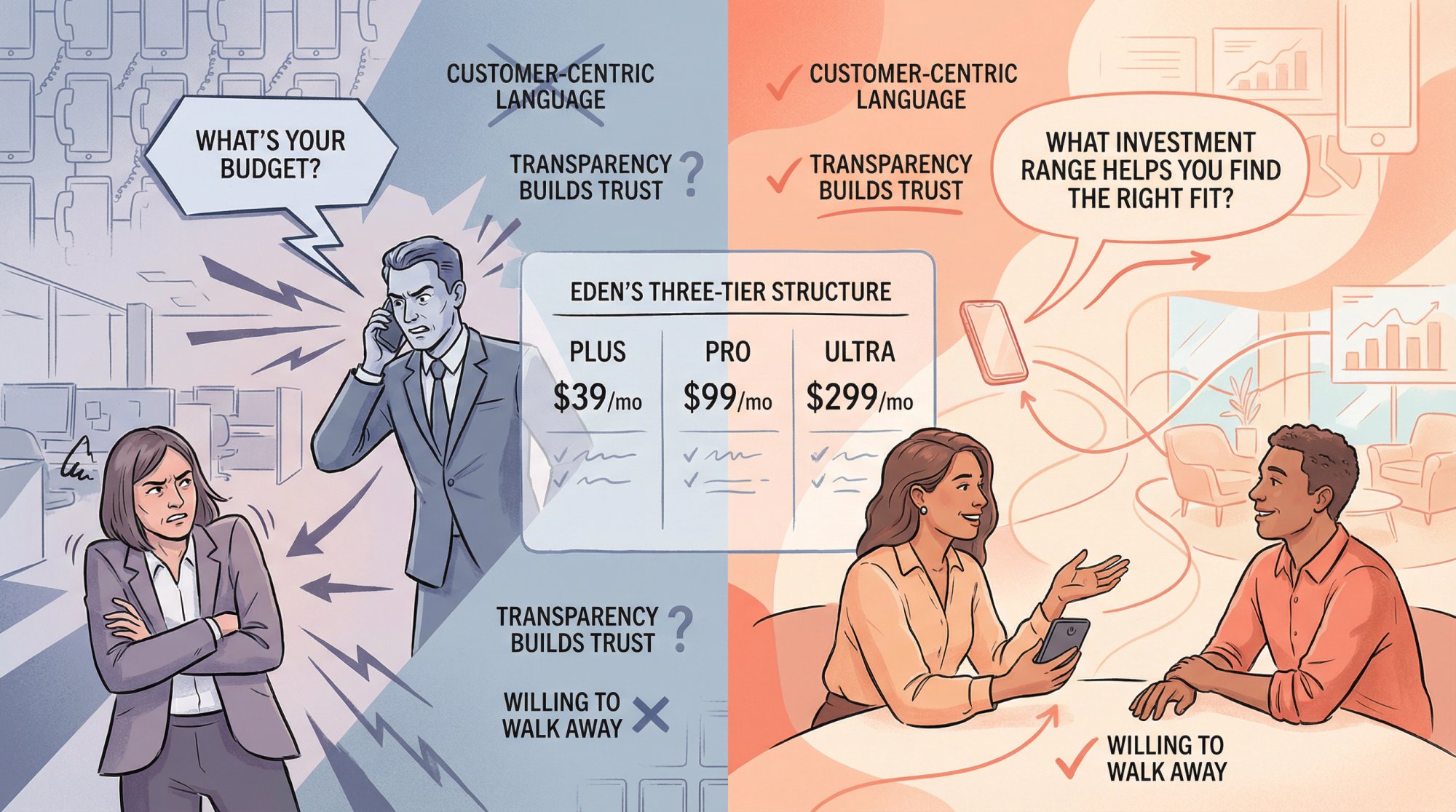
Budget and authority are classic qualification factors, but they're also awkward to ask about. You need to handle them tactfully.
Smart Ways to Discuss Budget on Qualification Calls#
Bringing up budget is necessary because many sales fall apart when the solution costs way more than the prospect can afford. Better to know early.
Don't lead with budget. And don't make it sound like an interrogation. Frame it as wanting to find the right fit:
-
"Have you considered what investment you're looking to make to solve this?"
-
"Do you have an estimated budget range? That helps me point you to the most relevant options."
-
"Just to make sure we can meet your expectations, what ballpark figure were you thinking?"
Notice the language: it's customer-centric. You're asking to help them, not to size them up.
You can also mention your typical pricing first:
| Plan Type | Monthly Cost | Best For |
|---|---|---|
| Basic | $39/month | Small teams, basic features |
| Pro | $99/month | Growing businesses, full features |
| Ultra | $299/month | High-volume operations |
"Our solutions range from around $39/month for basic plans up to $299/month for our full suite. Does that align with what you were expecting?"
This way you're not demanding their budget, but you're still finding out if there's a mismatch.
If they're hesitant or say they don't have a budget yet, that's okay. Try: "Are you looking for the most economical solution, or are you more focused on getting the perfect fit even if it costs a bit more?" Their answer hints at budget sensitivity.
Qualification advice notes that budget alone doesn't make or break qualification, but it provides insight. If they're great but have no budget now, you can nurture them. If they can't afford your solution at all, better to know now.
Be honest about costs. Don't hide pricing until the end (that feels salesy and erodes trust). Transparency builds credibility.
And critically: never criticize their budget. If they say "We only have $X," don't respond with "Oh, that's not enough." Instead:
"Got it. In that range, we might be able to do A or B, but perhaps not C. Let's see what makes sense."
If it's truly far off and you know it won't work:
"I want to be respectful of your budget. Given what you're looking for, I'm concerned our solution might be over that amount. I'd rather be upfront so you can make the best decision, even if that means exploring other options."
Paradoxically, being willing to walk away from a bad-fit deal shows integrity. They'll appreciate that you didn't try to sell them something they can't afford.
How to Identify Decision Makers on Phone Calls#
You need to know who the decision-makers are. Often the person you're talking to might be researching for someone else, or they might need to consult others.
To avoid sounding accusatory, use inclusive language:
-
"Who else, besides yourself, will be involved in this decision?"
-
"Is there anyone else on your team who'd want to join our next call if we get into details?"
-
"How does your organization typically decide on purchases like this? Is it just you, or do others weigh in?"
In B2B, a buying decision can involve an average of 6 to 7 people. So you're showing awareness that group decisions are normal. If they say "It's just me," great. If not, you can offer: "Would it be helpful to include [that person] in a demo or send them info?"
This multi-stakeholder reality is why many businesses use virtual receptionists to ensure consistent messaging across all decision-makers.
Pay attention to their role and language. If you're talking to front-desk staff who reached out, they might just be gathering info for the owner. Ask: "And will you be the one using this day-to-day, or someone else?" or "Who would benefit most from this solution in your company?"
If they start talking about their manager or owner, you know who the real decision-maker is. Your strategy might then be to arm your contact with info, or request a meeting with the higher-up.
The key is tone. Keep it casual and helpful. You're not interrogating them about chain of command. You're trying to understand their buying process so you can help them navigate it.
How to Present Your Solution Without Being Pushy#
By now, you've gathered the key pieces: what they need, their urgency, possible budget, and who's involved. Time to synthesize and show how you can help, without launching into a pitch.
The play:
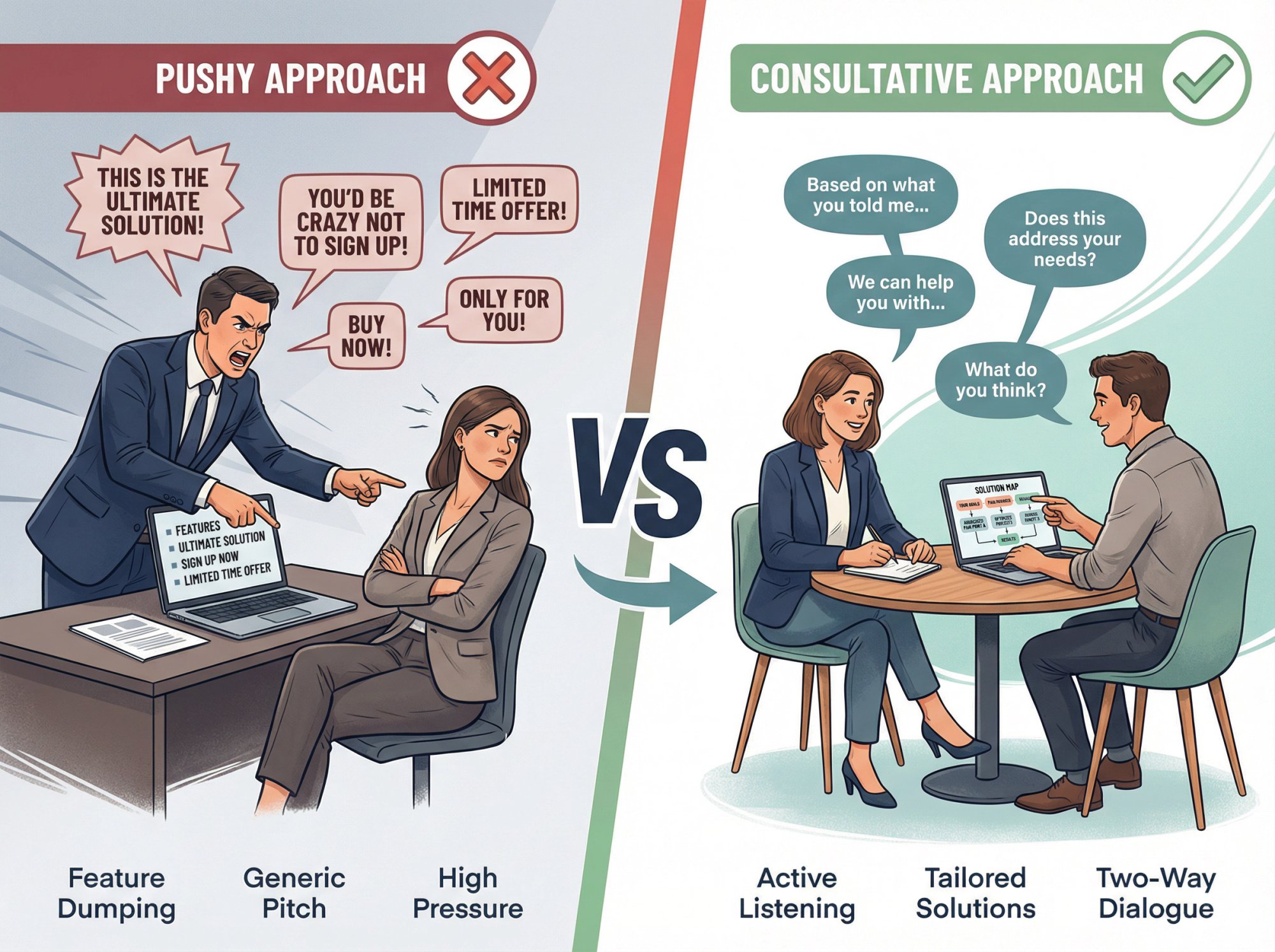
1. Recap their needs in your own words
"So, John, it sounds like your main concern is missing calls from clients after hours and that's costing you business, right?"
This shows you were listening and lets them confirm or clarify.
2. Align your solution to their specific needs
Don't rattle off every feature you have. Tailor your response to what they care about:
"We see that a lot. Many of our customers come to us for exactly that reason. Our AI receptionist answers customer calls 24/7 so you never miss an opportunity. She can book appointments or send you lead info immediately, so you're capturing calls that would otherwise go to voicemail."
Notice: you explicitly addressed their pain (missed after-hours calls) with a benefit (24/7 answering). It's framed as solving their problem, not bragging about features.
3. Keep it consultative and honest
Use phrases like:
-
"We can help you with..."
-
"This might be a good fit because..."
-
"Based on what you told me, I genuinely think our call handling service can eliminate that pain point."
Avoid hype: "This is the ULTIMATE solution for ALL your needs!" sounds fake. And avoid pressure: "You'd be crazy not to sign up today."
If there are limitations or things you can't do, be upfront. Being honest about what your solution won't do builds trust. It proves you're not just saying "yes" to everything.
4. Invite questions
After explaining how you can help, pause:
"Does that sound like it could address what you're looking for?"
"How does that solution sound to you?"
This makes it collaborative. You're asking for their input, not steamrolling them. If they have questions (and qualified leads usually do), answer candidly. If you don't know something, say so: "That's a great question. Let me find out and get back to you."
Research emphasizes that modern buyers prefer salespeople who educate and advise rather than push product. By focusing on helping rather than closing, you differentiate yourself from the typical salesperson.
What to Do When a Lead Isn't a Good Fit#
If you realize your offering can't meet their core needs, say so.
"You mentioned you need integration with XYZ system. That's not something we do at the moment, and I know that might be critical for you. I have to say, it might not be the best fit right now."
This level of honesty is the opposite of "salesy." You're willing to walk away rather than sell something that won't help them. Interestingly, such honesty can sometimes make them more interested ("maybe that integration isn't a deal-breaker if everything else works"). But even if it doesn't lead to a sale, you leave a positive impression. They might refer others to you or come back when circumstances change.
If the prospect's needs and your solution align well, you've now built a strong case. They're probably thinking, "This company actually gets my problem and can fix it." Perfect. Time for the next step.
How to Close Qualification Calls With Clear Next Steps#
Every good qualification call ends with a clear next step or a graceful exit. Don't let the conversation just fizzle out.
Best Ways to Schedule Follow-Up With Qualified Leads#
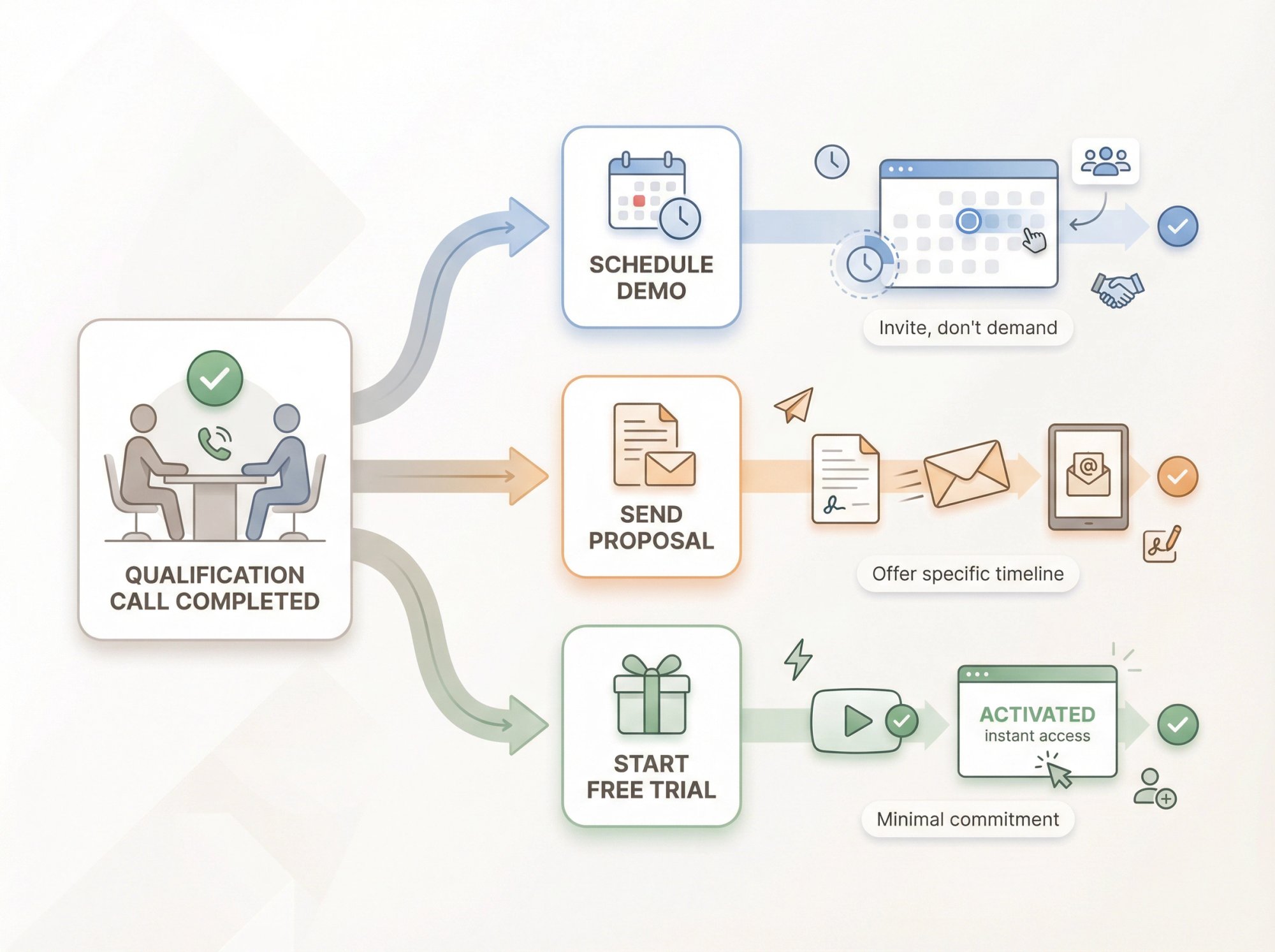
Don't leave without a mutually agreed follow-up. People's interest fades after a call, so lock in the next interaction while you're both on the line.
Keep it straightforward:
-
"It sounds like we're on the right track. The typical next step is a demo with our technical team so you can see how this would work for your business. Would you be open to scheduling that for next week?"
-
"I can put together a proposal addressing what we discussed. Can I email that to you by Friday, and then we can review it together early next week?"
-
"Since you're ready to move forward, we can get started today if you'd like, or you can sleep on it and we'll talk later in the week?"
Notice: each is phrased as a question or offer, not a demand. You're inviting them, not commanding them. And by referencing what's "typical" or "since you're ready," you normalize the next step.
For example, with Eden's AI receptionist service:
"A lot of our customers like to try Eden free for a week to see it in action. If you're interested, we could set that trial up for you. Would you like to give it a go?"
This doesn't feel pushy. It feels like you're offering value with minimal commitment.
Get confirmation. If they agree, nail down specifics: date and time for the demo, confirm their email for the proposal, etc. If they hesitate (maybe they need to check with someone or look at their calendar), lock down a tentative time:
"No problem, let's pencil in next Wednesday for now, and if it doesn't work we can adjust."
How to End Calls With Unqualified Leads Professionally#
End on a positive note. Don't burn bridges.
If you've determined they're not qualified (wrong budget, critical need you can't meet), say something like:
-
"Based on what we talked about, I'm not sure we're the best solution right now, and I don't want to waste your time. It might be better for you to [mention alternative]. That said, if things change or you need [something you can do], we'd be happy to help in the future."
-
"It was great learning about your needs. To be transparent, I think you might actually be served better by [other type of solution]. I can recommend a couple resources if you'd like?"
This non-salesy exit surprises people in a good way. They're thinking, "Wow, they didn't try to force it. They actually helped me." That goodwill generates referrals and future business.
If the lead is lukewarm (qualified but uncertain), set a softer next step:
"How about I send you some additional info, and we can touch base in a couple weeks? I'm here to answer any questions that come up."
Always end politely:
"Thank you for a great conversation, I really enjoyed learning about your business."
"Great, I'm looking forward to our demo on Tuesday. I'll email you the details shortly."
"No matter what, I wish you the best of luck with [their initiative]. Feel free to reach out anytime if you have questions."
This leaves the door open. Qualifying leads is about long-term efficiency. Not every call results in a sale, but every qualified lead should move forward, and every unqualified lead should leave with a positive impression.
How AI Phone Systems Help With Lead Qualification at Scale#
Look, we know what you're thinking. "This all sounds great, but I can't personally answer every call with this level of care. I'm running a business."
Fair point. That's exactly why we built Eden.
Our AI receptionist handles initial inbound calls and asks these exact qualifying questions in a natural, conversational way. Eden's technology analyzes your business, learns your specific qualifying criteria, and engages callers 24/7 with a professional, helpful tone.
The key is consistency. Every caller gets a warm greeting and the important qualifying questions, no matter when they call. No one gets voicemail. No one feels ignored. Businesses using 24/7 answering services report capturing significantly more qualified leads simply because they never miss that first touchpoint.
And because Eden isn't on commission, she has zero incentive to be pushy. She'll follow the friendly, information-focused approach you configure. When a lead meets your criteria, Eden can book appointments or transfer the call to you immediately, so hot leads get prompt attention.
Of course, the human touch you provide in a live call is powerful. Technology assists, it doesn't replace genuine empathy and expertise. But if you're missing calls or struggling to handle every inquiry with this level of care, tools like Eden's virtual receptionist ensure every lead is greeted and qualified in a non-salesy, customer-centric way (even at 2 AM).
Frequently Asked Questions#
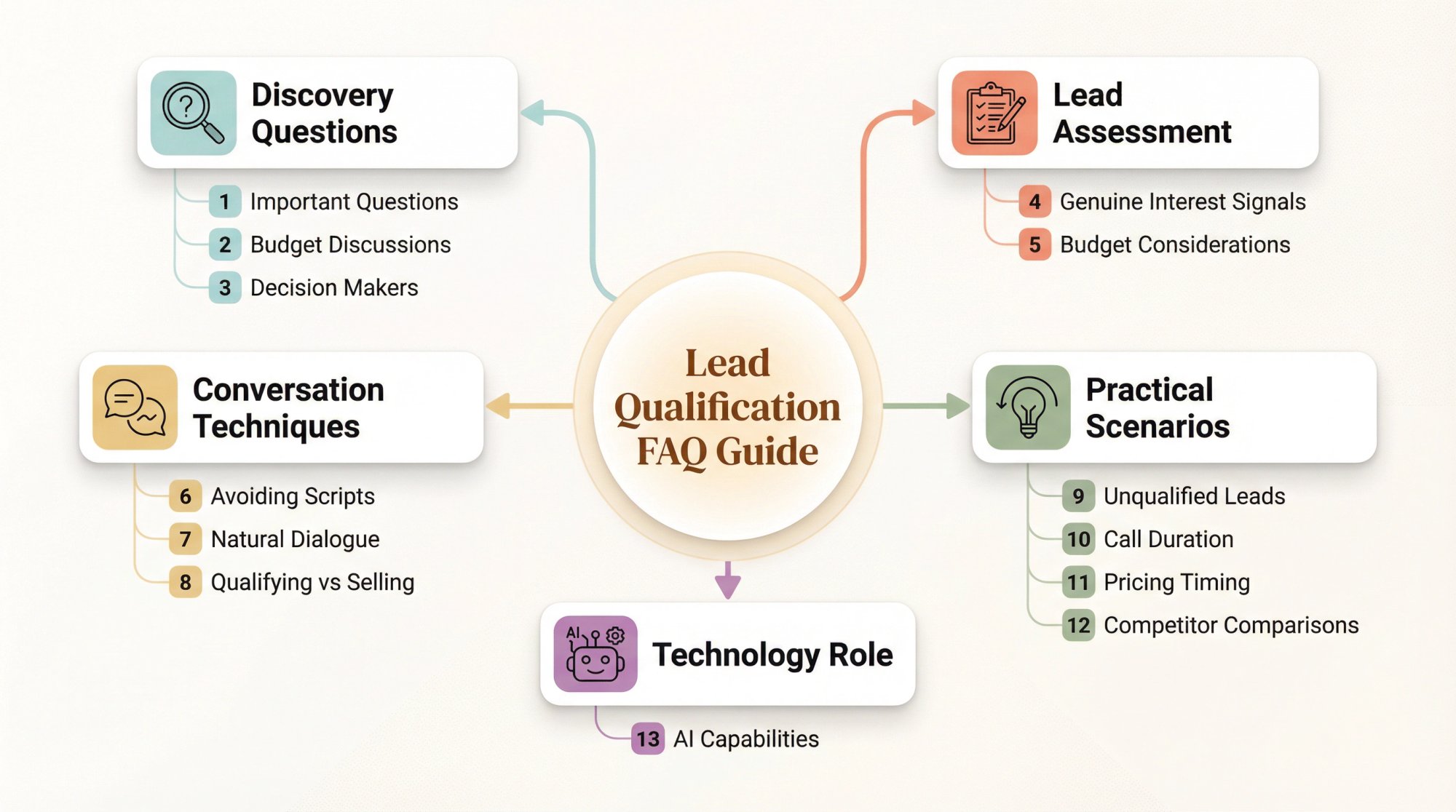
What are the most important questions to ask when qualifying a lead?#
The most important questions uncover needs, timing, budget, and decision authority. Start with open-ended questions like "What prompted you to look for a solution?" and "What challenges are you trying to solve?" Then move to timing ("When do you need this implemented?"), budget ("What investment range are you considering?"), and authority ("Who else will be involved in this decision?"). These questions give you a complete picture of whether the lead is qualified.
How do I ask about budget without sounding pushy?#
Frame budget questions as helping them find the right fit. Try: "Do you have an estimated budget range? That helps me point you to the most relevant options." Or share your typical pricing first: "Our solutions range from $X to $Y. Does that align with what you were expecting?" Never criticize their budget. If it's too low, be honest: "I want to respect your budget. Our solution might be over that amount, so I'd rather be upfront." This shows integrity, not pushiness.
What if the person I'm talking to isn't the decision-maker?#
Ask inclusive questions: "Who else will be involved in this decision?" or "How does your organization typically decide on purchases like this?" This acknowledges that group decisions are normal. If they mention others, offer to include them: "Would it be helpful to send them information or include them in our next call?" Your goal is to understand the buying process and help your contact navigate it, not to dismiss them because they're not the final decision-maker.
How can I tell if a lead is genuinely interested or just browsing?#
Listen for urgency signals. Genuine leads usually have a specific problem, a timeline, and consequences if they don't solve it. Ask: "Why are you looking for a solution now?" and "What happens if you don't solve this?" Browsers often say "just exploring" or have no clear timeline. Also watch their engagement level: genuine leads ask specific questions, take notes, and want to move forward. Browsers are vague and noncommittal.
Should I disqualify a lead if they don't have budget right now?#
Not necessarily. Budget is just one factor. If they're a great fit (real need, right authority, good timing), you can nurture them until budget becomes available. But if they can absolutely never afford your solution, it's better to be honest about that. You might say: "Based on what you're looking for and your budget range, this might not be the right fit. But if your situation changes, we'd be happy to help in the future."
How do I avoid sounding like I'm reading from a script?#
Don't follow a script word-for-word. Use your questions as a guide, but adapt based on what they say. Practice active listening: respond to their answers, ask follow-up questions, and let the conversation flow naturally. Smile when you speak (it comes through in your tone), use their name, and use contractions ("I'm" not "I am," "you're" not "you are"). The goal is to sound like a real person having a genuine conversation, not a robot checking boxes.
What's the best way to end a qualification call with an unqualified lead?#
End on a positive note. Thank them for their time and be honest: "Based on what we discussed, I'm not sure we're the best fit right now. I'd rather be upfront than waste your time." Then offer value: recommend an alternative solution or resource that might help them. Close with: "If your situation changes, we'd be happy to help in the future." This leaves a good impression even though there's no sale, which can lead to referrals later.
How long should a qualification call typically take?#
It varies based on complexity, but most qualification calls range from 10 to 30 minutes. For simple products or services, 10-15 minutes is often enough to cover the basics. For complex B2B solutions, you might need 20-30 minutes to understand their situation fully. The key is to be thorough without dragging it out. If you've gathered what you need and the next step is clear, don't feel obligated to fill time.
What should I do if the prospect asks for pricing before I've qualified them?#
Answer honestly but pivot back to discovery. Try: "I'd be happy to share pricing, and it helps if I understand your specific needs first so I can point you to the right options. Can you tell me a bit about what you're looking for?" Or give a range: "Our solutions typically range from $X to $Y depending on features. To give you an accurate number, it'd help to know [key qualifying question]. What's your main priority right now?" This satisfies their request while still gathering information.
Can AI really qualify leads as well as a human?#
AI can handle initial qualification consistently and at scale, but it works best as part of a system. AI receptionists can answer calls 24/7, ask key qualifying questions, and route hot leads to you immediately. They're great at capturing information and filtering out unqualified prospects. But complex sales or nuanced situations often benefit from human expertise. The ideal setup is AI for initial screening and humans for deeper qualification and closing.
How do I qualify leads without making them feel interrogated?#
Make it conversational, not transactional. Start with rapport-building, then use open-ended questions that let them tell their story. Say: "Can you tell me about..." instead of "What is your budget?" Listen actively and respond to what they say. Show genuine curiosity about their problem. Space out your questions naturally in the conversation rather than firing them off in sequence. When you approach it as a dialogue, not an interrogation, they'll feel heard, not grilled.
What's the difference between qualifying and selling?#
Qualifying is about discovering if there's a mutual fit. You're diagnosing their problem and determining if you can help. Selling is about persuading them to buy. On a qualification call, your job is to gather information and build trust, not to close a deal. As experts note: trying to sell during qualification is counterproductive and can backfire. When you focus on qualifying (not selling), you actually build more trust, which makes selling easier later.
How do I handle a prospect who's comparing multiple providers?#
Ask about their process: "Are you comparing a few providers? What's your timeline for making a decision?" This gives you context. Then position yourself as a resource: "I want to make sure you have all the information you need to make the best choice. What factors are most important to you?" By being helpful rather than defensive, you stand out. If they ask how you compare to competitors, focus on what makes you different and how you solve their specific problem, not on trashing other options.
The Bottom Line: Qualification is About Respect, Not Rejection#

Qualifying leads over the phone without being salesy comes down to one thing: being a proactive listener and genuine helper.
It's about asking the right questions about their needs, timeline, budget, and decision process in a warm, conversational way. It's about avoiding pushy tactics and instead focusing on understanding and assisting the prospect. When you do this, you build trust from the first call.
Remember, the qualification call is often the prospect's first real impression of what it's like to work with you. A well-qualified lead, handled with care, is far more likely to turn into a happy customer. A lead that's put off by a rough, salesy call might disappear forever (or tell others about the negative experience).
So adopt the consultative mindset: How can I help this person?
Approach each call with professionalism, empathy, and the clear structure we've outlined above. When you implement these techniques, you'll improve your conversion rates and differentiate your business as one that truly cares about customers from the first hello. That's the kind of reputation that leads to long-term success.
And if you need help answering calls consistently with this consultative approach at all hours, consider how Eden's AI receptionist can become your 24/7 lead qualification partner, capturing every opportunity without ever sounding pushy.
Ready to Transform YourCustomer Experience?
Join hundreds of businesses using Eden AI to handle calls, book appointments, and provide 24/7 customer support.