Telephone Answering Service: 2025 Guide
Discover how a telephone answering service can help your business grow. Learn to capture every call, improve customer support, and look more professional.
November 24, 2025
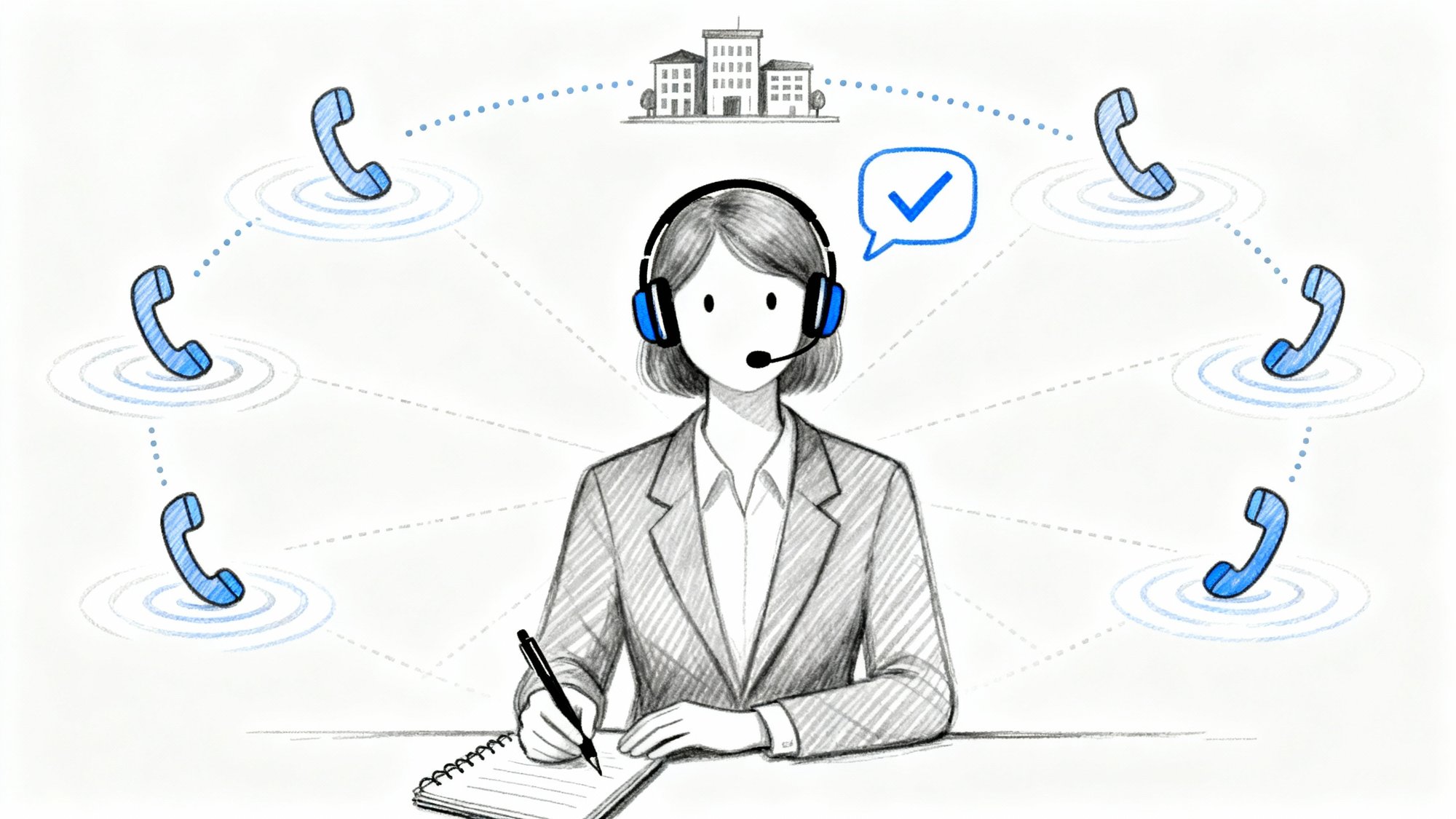
Your phone's probably ringing right now. Maybe you're stuck in a meeting, helping a customer, or trying to focus on actual work. That call goes to voicemail, and you tell yourself you'll return it later. But research shows that around 80% of callers hang up when they reach voicemail instead of leaving a message, and most won't call back. They'll just call your competitor next.
Missed calls aren't minor inconveniences. They're missed opportunities that cost revenue and damage customer trust.
This is exactly why telephone answering services exist. They make sure no call goes unanswered, helping you capture more leads and deliver great customer service around the clock. In this guide, you'll understand what a telephone answering service is, why it's valuable, how it works, what it costs, and how to choose the right solution for your business in 2025.

What Is a Telephone Answering Service?#
A telephone answering service handles incoming calls on behalf of your business. In practice, it means you have trained professionals (or advanced AI) answering your phone lines, greeting callers, and managing their requests as if they were your in-house receptionist.
According to industry sources, an answering service can:
• Take messages and deliver them to you via email, text, or an app
• Answer basic customer questions about your business
• Forward or transfer calls to the appropriate person on your team
• Schedule appointments by accessing your calendar
• Handle after-hours or overflow calls so every caller reaches a live person instead of voicemail
Unlike an automated phone menu, these services provide real-time response with a human touch (or a very human-like AI). Traditional live answering services are staffed by teams of virtual receptionists working for multiple businesses, giving even a small company the benefit of a full-time receptionist at a fraction of the cost.
Modern services may use AI voice assistants to perform the same role with greater efficiency. The end result is the same: when a customer calls your business, they're promptly greeted by a professional representative who can help them, rather than reaching an empty office or voicemail box.
Why Businesses Need Telephone Answering Services#
How to Stop Missing Calls with an Answering Service#
Missed calls equal missed business. Studies have found that about 80% of callers hang up when they reach voicemail, and most of those prospects will not call back.
Think about it. If your average customer is worth $500 and you miss just two calls per week, you might be losing over $50,000 in revenue per year to unanswered calls. One analysis showed that businesses replacing voicemail with live answering see about a 35% increase in leads captured on average.
A telephone answering service makes sure every call is answered by a real person, vastly increasing your chances of capturing the lead or sale. In short, an answering service prevents valuable opportunities from slipping away.
For businesses serious about capturing every opportunity, we built Eden to answer calls 24/7 with natural conversation and instant lead capture. You can start your free trial today and see the difference it makes.
Get 24/7 Phone Coverage Without Full-Time Staff#
Business hours don't always align with customer needs. A great call could come in after 6 PM, on a weekend, or during your lunch break.
A 24/7 answering service gives you round-the-clock coverage so that customers can always reach a live voice. This is especially crucial for service industries where emergencies happen off-hours. Think of a plumber getting a midnight call about a burst pipe, or a law firm receiving an urgent after-hours inquiry.
With 24/7 answering, an operator can reassure the caller and gather their details immediately, rather than that panicked customer moving on to the next provider. Even outside of emergencies, offering an around-the-clock point of contact shows customers you're committed to helping them.
Research indicates that 75% of consumers believe calling a business will get them a quicker response than other channels. If you answer that call, you're meeting their expectations and likely winning their approval.
How Answering Services Increase Business Productivity#
For many entrepreneurs and small teams, constantly interrupting your work to answer the phone can kill productivity. Every ring is a potential distraction.
If you're in a meeting or deep in focused work, you either break away to answer (and lose your momentum) or let it go to voicemail (and possibly lose a customer). By outsourcing call handling to an answering service, you free up your time and mental energy.
The service can screen out telemarketers and routine inquiries, pass you only the important calls, and take messages for the rest. This filtering prevents the constant "stop-start" effect of frequent interruptions, allowing you and your staff to concentrate on your core work.
An answering service acts as a buffer between your business and the constant noise of the phone, so you can be more efficient with your day while knowing that callers are still being helped promptly.
Build a Professional Image with Phone Answering#
First impressions matter.
If a prospective client calls and gets no answer or a generic voicemail, it sends the wrong signal. Maybe your business is too small, too busy, or not attentive. On the other hand, having calls answered on the first few rings by a polite, knowledgeable receptionist projects a professional, credible image.
A telephone answering service can make a small business appear larger and more established. Importantly, callers typically cannot tell that the receptionist is external to your company. They'll assume they're speaking to your front desk.
Good virtual receptionists are trained to act as an extension of your team and follow your scripts, so your brand image is maintained at all times. You can also get a dedicated business phone number through many services, often with a local area code or toll-free number, further enhancing your professional presence.
Answering Service Cost vs. Hiring a Receptionist#
Hiring a full-time in-house receptionist is expensive. Not just salary, but benefits, office space, and equipment. In the U.S., a receptionist's average salary is around $33,000 per year (over $2,750 per month).
In contrast, telephone answering service plans start at only a few hundred dollars per month for small call volumes.
You get a team of people to cover your calls 24/7, without paying overtime or worrying about sick days and vacations. It's like having an entire front-office staff for a fraction of the cost.
This is a huge benefit for startups and SMEs with tight budgets. You can provide great customer service without breaking the bank. As your call volume changes, you can scale the service up or down easily, something that would be difficult with a full-time employee.
An answering service converts a fixed labor cost into a flexible service expense that you control.
How to Handle After-Hours and Emergency Calls#
If your business deals with urgent situations (repair services, property management, professional services), missing an emergency call after hours can be dire. Customers facing a crisis won't wait for a callback. They'll move on to find help.
A 24/7 telephone answering service makes sure that even at 2 AM on a holiday, a live person answers and follows your emergency protocol (for example, paging the on-call technician, or alerting management) to address the issue.
Even for non-emergencies, many people call outside normal hours expecting to leave a message. Surprising them with a real human who can assist is a great way to impress customers. You demonstrate reliability and care by being there whenever they call.
Many answering services specialize in after-hours answering, helping businesses handle those late-night or early-morning calls that would otherwise go to voicemail. This not only prevents lost business, it also protects your reputation. You won't be known as "hard to reach" or unresponsive.
How to Improve Customer Satisfaction with Phone Answering#
Ultimately, using an answering service can significantly boost your customer satisfaction.
Callers appreciate when their concerns are heard immediately by a person, rather than navigating a phone tree or waiting for a callback. A friendly voice who can quickly help or reassure them leads to a positive experience, even if their issue can't be solved on the spot.
This kind of responsiveness builds trust. Customers are more likely to stay loyal and recommend your business if they consistently get good service when they call.
On the flip side, if phones go unanswered or issues are left to voicemail, frustration grows. By having an effective answering service, you show customers that you value their time and business, which in turn strengthens your brand reputation and relationship with them.
Types of Answering Services: AI vs Human vs Hybrid#
Not all answering services are alike. In 2025, businesses have more options than ever for how their calls are handled, from traditional human operators to advanced AI systems.
Human Live Answering Services (Traditional)#
These are the classic answering services that have been around for decades. Your calls are answered by real, live receptionists working remotely (often in a call center environment). The receptionists are trained to handle calls for many different client businesses.
They'll follow a script or instructions you provide, so callers get the answers or assistance they need. Human answering services offer a warm, personal touch. A skilled operator can sense a caller's tone, handle complex conversations, and provide empathy or reassurance in a way only a person can.
This human-only approach is considered the gold standard for personalized service, especially in high-touch fields like law firms or professional offices. The trade-off is cost: human labor is more expensive, and even the best receptionists can only handle one call at a time.
But if every call requires nuance, judgment, or a premium brand experience, a human answering service may be the right choice.
Automated Phone Systems (IVRs and Virtual PBX)#
Another option is not a "service" company at all, but rather an automated phone system you set up. Many business phone providers offer auto-attendant and IVR (Interactive Voice Response) features.
These systems greet callers with a recorded message and menu (e.g., "Press 1 for Sales, 2 for Support…"). They can route calls to the correct person or department, play recorded info (hours, location), and take voicemail.
Automated answering solutions are often included with business phone plans and can be very cost-effective, sometimes starting around $20 to $30 per month for small business VoIP plans. They're great for handling simple routing tasks and making sure calls are at least acknowledged.
But they lack the personal touch. Many callers faced with elaborate phone menus get frustrated (or "zero out" to try to reach a human). These systems also can't handle open-ended questions or complex issues.
Auto-attendants are a useful tool for basic call handling and can complement a live service, but on their own they don't fully replace a live receptionist.
AI-Powered Answering Services (Virtual AI Receptionists)#
In the last couple of years, AI answering services have emerged as a cutting-edge alternative. These services use artificial intelligence (advanced speech recognition and natural language processing) to converse with callers in a human-like manner.
The AI voice can greet customers, understand questions or appointment requests, and respond intelligently. AI-only answering services can handle many routine calls without any human intervention.
For example, an AI receptionist can answer FAQs ("What are your hours?"), collect a caller's name and number, or even book appointments in your calendar through a natural conversation. The major benefits are 24/7 availability, instant scalability, and lower cost.
AI doesn't need breaks and can handle multiple calls concurrently, so you're not paying per call in the same way. AI services are typically more affordable for small businesses, often ranging from about $40 to $150 per month depending on usage, which is well below many human-staffed plans.
Modern AI voices have improved to the point that some callers don't realize they're not speaking to a person. But it's not a perfect solution for every situation. AI may struggle with very complex or emotional conversations, and it might not catch subtle nuances like a human would.
The best AI services focus on structured tasks (intake, scheduling, basic Q&A) and know when to escalate to a human or live transfer if something exceeds their programming.
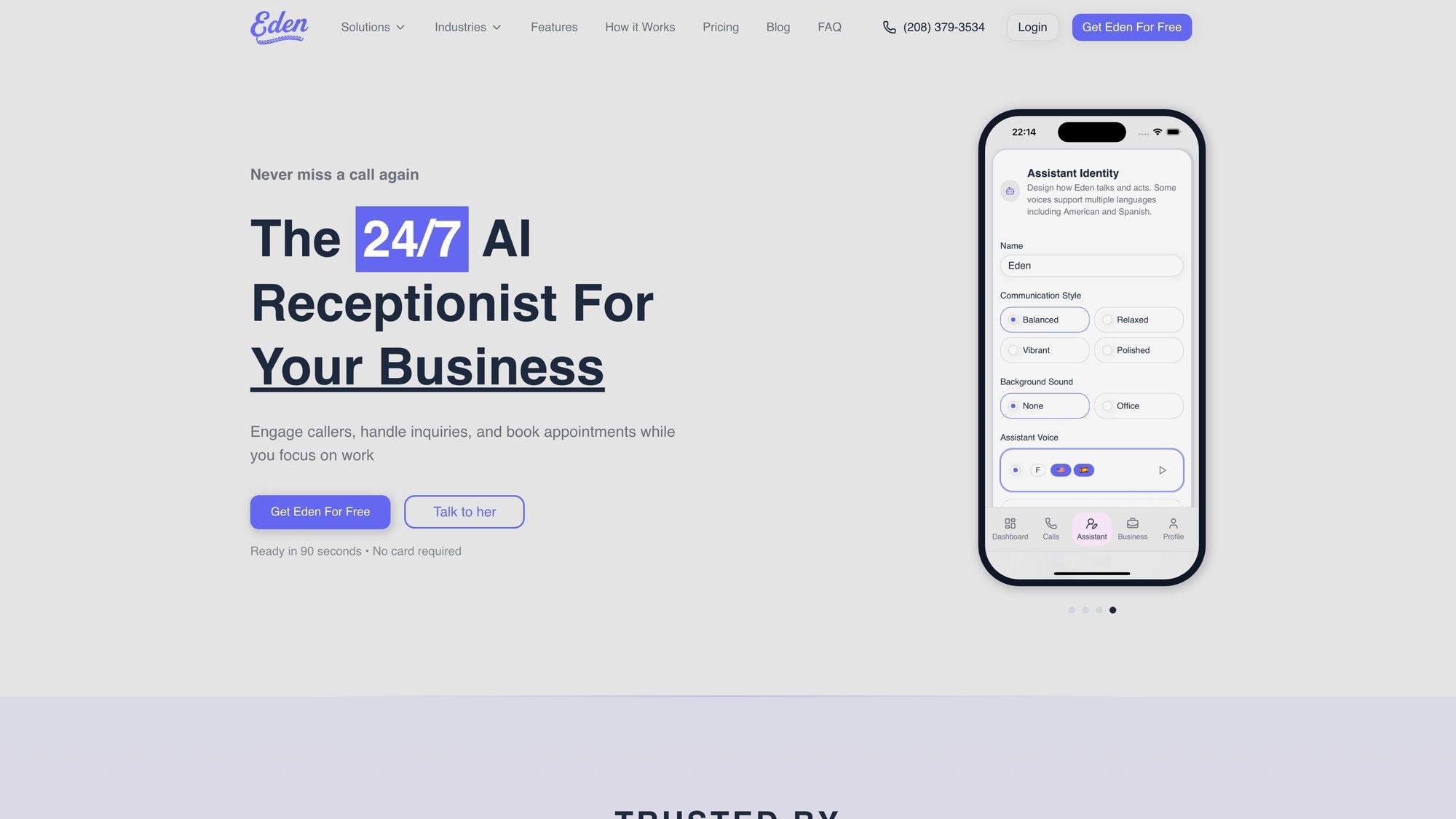
At Eden, we've built an AI receptionist that handles calls with natural conversation, instant appointment booking, and intelligent call routing. Our AI can be up and running in minutes, answering calls 24/7 while you focus on running your business.
Hybrid (AI + Human) Services#
Some providers offer a hybrid approach, combining AI technology with human backup to get the best of both worlds.
In a hybrid answering service, an AI might answer the call first and handle the initial greeting or simple requests. If the caller's need is straightforward, the AI can resolve it quickly. But if the call becomes complex or the caller seems upset or confused, the AI system will automatically route the call to a live receptionist who can provide the personal touch.
This approach makes sure you get efficiency (AI handles high-volume, routine calls instantly) while maintaining quality for the tougher calls that need human empathy or decision-making.
Hybrid services can be a great fit when you have a mix of call types. For example, a clinic that gets lots of appointment booking calls (which AI could schedule) but also some emergency calls or sensitive situations (which a human should handle).
The downside to hybrid models is that they may still incur much of the cost of human services (since staff must be available on standby), and they require careful coordination so the transition from AI to human is smooth.
Still, many see hybrid solutions as the future of call answering: you optimize with AI but never compromise on customer experience, because a human is always there as a safety net.
Quick note: When evaluating providers, it's useful to clarify what kind of service they offer. Terms like "virtual receptionist," "call center," "automated attendant," and "AI receptionist" all fall under the broad umbrella of "telephone answering service," but they operate differently. Knowing the distinction between these types helps you choose a solution that matches your needs and expectations.
How to Choose a Telephone Answering Service#
Regardless of type, most quality answering services offer a suite of features to make sure call handling is seamless. When comparing services, pay attention to the following key features and capabilities:
Live Call Answering#
The core feature. Calls are answered by a live agent or AI in your company's name. Look for fast answer times (many services answer 95%+ of calls within the first 3 rings for live agents) and a pleasant, customizable greeting.
Message Taking and Delivery#
The service should capture the caller's name, contact info, and reason for calling (at minimum) and promptly deliver messages to you.
Common delivery methods are email, SMS text, or through a web portal/app. Make sure the service can send messages in real-time so you're always in the loop.
Call Screening and Routing#
Good services will follow your instructions on how to handle different calls. For example, you might direct them: "If the caller is asking for sales, transfer the call to my cell; if it's a current client, take a message; if it's an emergency service request, call my technician on duty."
Advanced answering services can screen calls and transfer important ones to you or your team members as needed (either a "warm transfer" where they announce the caller, or a blind transfer). This way, you're only interrupted for high-priority calls, and everything else is handled appropriately.
Appointment Scheduling#
Many services (including AI receptionists and some live services) can book appointments directly into your calendar.
Typically, you'd integrate your online calendar (Google, Outlook, etc.) or provide a schedule, and the service will offer callers available time slots. This is a powerful feature for service businesses. A prospect calls and ends up booked for a consultation on the spot, no phone tag needed.
At Eden, our AI can sync with your calendar and book appointments instantly during the call, saving you hours of back-and-forth scheduling.
FAQ Knowledge & Customer Info#
If your business gets a lot of common questions ("Do you take walk-ins?" "What's the pricing for X?"), you'll want a service that can handle these FAQs.
Live receptionist services allow you to supply a FAQ sheet or knowledge base for the operators to reference. AI services often can ingest an FAQ document or connect to your website to answer common inquiries. This way, callers can get immediate answers to basic questions without waiting for a callback.
Also, some services maintain a list of your VIP clients or repeat callers, so they can personalize the call ("Hi John, welcome back!"). This is more common in advanced or premium plans that offer customer data integration.
Bilingual Support#
If you serve a multilingual customer base, look for answering services that offer bilingual agents (e.g. English/Spanish) or multilingual AI.
In the U.S., many services provide Spanish-English bilingual receptionists as an option. Being able to greet and assist callers in their preferred language can be a huge advantage and make more callers comfortable.
Eden's AI can seamlessly switch between English and Spanish, making it easy to serve diverse customers without hiring multilingual staff.
After-Hours & Emergency Handling#
Make sure the service can follow special protocols for urgent calls, especially if you're in a field where emergencies happen. This might include escalation rules (e.g., text the on-call doctor for anything classified as an emergency, or dispatch a service technician).
Some services will ask your callers a few triage questions to determine urgency. For a professional service or emergency trades business, this feature is vital. Also, confirm that the service truly operates 24/7/365 (including holidays) if you promise round-the-clock availability.
Spam Blocking and Filtering#
Unwanted spam and telemarketing calls plague businesses daily. High-quality answering services help mitigate this.
Live operators can quickly recognize obvious spam (e.g., robo-dialers) and dispose of those calls in a few seconds (saving your minutes). Newer AI-powered services often incorporate spam detection algorithms.
At Eden, we use our IntelliSpam filter to automatically hang up on robocalls, so you don't get charged for them and your paid minutes go only to real customers.
Call Recording and Transcription#
Some services provide recordings or transcripts of your calls. This can be useful for quality assurance, dispute resolution, or simply to review exactly what a customer said.
AI services typically have built-in transcription for every call, since the speech recognition is part of how they operate. Human services might offer recordings upon request or through an online dashboard.
If having a record of calls is important to you, look for this feature (keeping in mind any privacy or compliance considerations).
Online Dashboard/Portal#
Today's answering services usually come with a client portal where you can log in to see your messages, call logs, and update your instructions.
This real-time visibility is very helpful. You can often adjust your availability, change the contact who should get transfers, download call audio, or analyze call volume stats. A user-friendly dashboard and/or mobile app is a sign of a modern, well-equipped service.
Customization and Scripting#
Every business is unique. The service should allow some level of custom script or specific instructions.
For example, you might want the receptionist to mention a promo code, or you may have a list of qualifying questions for new leads. Check that the provider is willing to accommodate your custom questions or greetings.
AI services learn from your website and allow configuration of their greeting and questions. Human services often will work with you during onboarding to create a script and decision tree. The more flexible the service is to fit your processes, the better it will represent your business.
Integration with Other Systems#
Higher-end answering services can integrate with your other business tools. For instance, logging a call into your CRM, creating a support ticket, or sending information to a Slack channel.
If you desire such integration, ask providers what's possible (it might be available in premium plans or via API). AI-based solutions, in particular, are starting to connect with various apps (scheduling software, CRMs, etc.) to automate workflows.
While not every small business needs this, it can be a big time-saver for the right use case.
In summary, make a checklist of the features that matter most to you. Prioritize the must-haves (e.g., 24/7 coverage, bilingual, appointment booking) versus nice-to-haves. Then make sure the services you evaluate meet those needs.
A truly top-notch telephone answering service will act almost like an extension of your own staff, handling calls seamlessly and delivering all the information and support you and your callers require.
How Does a Telephone Answering Service Work?#
You might be wondering what actually happens behind the scenes when you use an answering service. Here's a step-by-step look at how most telephone answering services operate and how you would set one up:
① Call Forwarding Your Phone
To begin using an answering service, you'll direct your business phone line to them whenever needed. This is typically done by setting up call forwarding.
For example, you might forward all calls unconditionally (so the service always answers first), or use conditional forwarding (calls only forward if you don't pick up after, say, 3 rings, or forward after hours).
Most phone systems (landline, mobile, or VoIP) support forwarding using a code or setting. The service will give you instructions for your carrier. Setting this up is usually quick (often just dialing a code like *72 plus the service number, for traditional carriers). Once in place, whenever a customer calls your number, the call automatically hops over to the answering service's line.
② Identification of Your Business
When the call rings into the answering service's system, it will recognize which client the call is for (typically by the phone number dialed or a client account ID).
Answering service receptionists often see a screen popup with your company name and any specific call-handling instructions while their phone is ringing. If it's an AI service, the AI is already programmed with your business info. This way, whether human or AI, the service knows how to answer before picking up.
③ Professional Greeting
The call is answered promptly with your custom greeting. For example, "Good afternoon, [Your Company Name], how may I help you?"
The service will use whatever style and wording you prefer. This immediate, friendly greeting gives the caller the impression they've reached your front desk. From the caller's perspective, it's seamless. They dialed your number and got an answer; they typically won't even realize it's outsourced.
④ Handling the Caller's Request
Now the receptionist (live or automated) engages with the caller to figure out what they need. Using the script and protocols you've set up, they will do the right thing.
This could be simply taking a message ("I'll let John know you called and have him get back to you shortly."), or it could be more involved: answering questions using your provided FAQs, looking up an order status in your system (if integration is enabled), or scheduling an appointment.
If the service is AI-driven, it will use natural language understanding to identify the caller's intent and respond accordingly. If it's a live agent, they will follow decision-tree prompts on their screen.
For urgent or specific scenarios, the instructions might say to transfer the call to you or another on-call staff member. In that case, the receptionist will place the caller on hold and attempt the transfer (for example, dialing your mobile and announcing the call). If you accept, they patch the call through; if you decline or aren't reached, they go back to the caller and take a message.
⑤ Message Documentation
For any call where a message is taken, the service creates a call report. This includes essential details like the caller's name, phone number, time of call, and the reason for calling or message for you.
Good services train their agents (or AI) to ask clarifying questions to get thorough information. Once the call is finished, this information is compiled into a message entry.
⑥ Notification to You/Your Team
The answering service then immediately sends you the details of the call. Depending on your setup, you might get an email with the message, a text alert, or a mobile app notification.
Many services can send to multiple contacts or distribution lists (for example, text the on-call technician for emergencies, but email the office manager for routine messages). If the call was recorded or transcribed (as some AI services do), those might be attached.
Essentially, within moments of the call, you know what it was about and any follow-up needed. If it was something the service resolved (like scheduling an appointment), that update is provided too (e.g., "Appointment set for Tuesday 10 AM with Jane Doe").
⑦ Ongoing Updates and Customization
As you work with the service, you can refine the instructions over time. For example, if you start getting a lot of a certain type of call, you might add a new FAQ or tell the service to start forwarding those to a different person.
Most services allow you to update your script or on-call contacts via the online dashboard or by contacting their support. It's a continuous feedback loop. The better you tailor the script and information, the better the service can represent you.
If it's an AI system, it may even learn and improve automatically from each interaction (machine learning can help it better handle accents or new questions as it gains experience).
From a setup standpoint, getting started is usually very straightforward. Many modern answering services (especially cloud-based and AI services) boast setup times of just a few minutes.
Typically you'll create an account, provide some basic business info (your company name, time zone, key contacts, the greeting you want, etc.), and either fill out a detailed intake form or have a brief onboarding call to go over your needs.
At Eden, our AI receptionist can launch by simply scanning your website for information and is ready to take calls almost immediately. You can sign up and be live in under five minutes.
A human-based service might spend a bit more time on boarding to make sure their agents are trained on your account specifics. In either case, once you configure call forwarding, you can literally start having calls answered that same day.
Behind the scenes, live answering services use call center software that routes calls and provides scripts to their receptionists, while AI services use telephony plus AI cloud platforms to perform speech recognition and generate responses. These technical details are abstracted away from you. As the client, you mainly interact with the service through their portal and via the messages you receive.
To summarize, when a customer calls you, an answering service steps in instantaneously, acting as your voice, and makes sure the caller is helped. Then it connects the dots by getting the info to you (or connecting the call to you) as per your instructions. It's a bit like having a super-efficient front desk that magically appears whenever a call comes in, then disappears when not needed.
Telephone Answering Service Cost in 2025#
One of the most common questions businesses have is "How much will an answering service cost me?" The answer depends on the service type and your call volume, but we can break down typical pricing models and ranges in 2025.
Pricing Models#
Most telephone answering services charge in one of three ways:
① Per Minute
You pay for the total time the agents spend on your calls (usually measured in seconds and rounded up to the nearest 30-second or 1-minute increment). For example, if you get a lot of short calls, this can be efficient; if you have fewer but longer calls, costs will accumulate with call duration.
② Per Call
You pay a fixed fee for each call that the service handles, regardless of length. This model is less common nowadays, and you have to watch how they define a "call." Wrong numbers might still count and cost you the fee.
③ Monthly Plans (Minute Bundles)
The most popular approach is a monthly subscription that includes a certain number of minutes (or calls) per month, plus an overage rate if you exceed that allotment. For instance, a plan might include 100 answering minutes per month, with additional minutes billed at a set rate (say $1.10 per minute extra).
Many services publish tiered plans (e.g. 100 minutes, 250 minutes, 500 minutes, etc.) and you choose based on your expected volume. There may also be one-time setup fees (anywhere from $0 to $50+), though a lot of providers nowadays waive setup fees to stay competitive.
Typical Cost Ranges#
According to industry data, in 2025 the average cost of a small-business answering service plan ranges roughly from about $135 at the low end to $400+ per month for moderate usage, with higher-volume plans scaling up to $1,000+.
Here's a breakdown of common plan sizes and costs, based on a 2025 pricing survey:
| Monthly Minutes | Typical Cost Range | Best For |
|---|---|---|
| ~100 minutes | $135 to $250 | Solo professional or small office with low call volume |
| ~250 minutes | $330 to $525 | Small businesses needing 24/7 coverage |
| ~500 minutes | $495 to $925 | Businesses with substantial inquiry rates |
| 1000+ minutes | $950 to $1,600+ | High call volumes or multiple lines |
| 2000+ minutes | ~$2,500+ | Large/enterprise volumes |

For context, many human-staffed answering services charge roughly $1.00 to $1.50 per minute of call time, on average. Some economy providers might be a bit lower (around $0.80/min) and premium or specialized ones higher (up to $2.00/min for highly trained receptionists).
AI Answering Service Pricing#
AI-based services tend to have different pricing structures. Many offer flat monthly rates with generous or unlimited minutes, or they charge by the minute but at lower effective rates since there's no human labor cost.
For example, some AI receptionist services in 2025 cost about $50 to $300 per month depending on capabilities and call volume, and one report noted most small businesses pay between $40 and $150 monthly for AI phone answering, which often covers a lot of calls.
Because AI can handle calls more cheaply, you'll generally pay less than you would for a human service with equivalent usage.
At Eden, our Plus plan starts at just $39/month for 200 minutes, and our Pro plan offers unlimited minutes for $99/month with advanced features like appointment booking and call transfers. This is significantly more affordable than human-staffed alternatives.
Additional Fees to Watch#
When comparing costs, be aware of extra fees that can sneak in:
Overage Fees
If you exceed your plan minutes or call allotment, overage minutes might be billed at a higher rate. These can add up quickly (e.g., $1.20 per extra minute over your plan). Try to find out the overage rate and consider a plan that fits your usual volume with a buffer.
Holiday or After-Hours Surcharges
Some older-school answering services charge extra for handling calls on major holidays or outside normal business hours. (Many modern services include 24/7 in all plans, but double-check.)
Special Services Fees
If you require custom scripting, integrations, or certain complex tasks, there might be added costs. For instance, highly specialized services might charge more for compliance or licensed professionals answering calls.
Transfer/Connect Fees
A few services charge a small fee if they transfer a call to you (like $0.50 or $1 per transfer). Clarify if warm transfers or dialing out to your team are included or billed extra.
Setup and Cancellation Fees
As mentioned, some providers have a one-time setup fee. Also, if you sign a long-term contract and later cancel early, there could be termination fees. Many services nowadays are month-to-month to avoid this, but always read the fine print.
Charging Increments
Check if the billing is in 1-minute increments or 6-second increments, etc. For per-minute plans, a service rounding up to the next minute for every call can slightly inflate usage compared to one that bills more precisely.
Monthly Billing Cycle Quirks
A subtle gotcha: a few services bill every 28 days instead of monthly (which means 13 billing periods a year). Make sure "monthly" truly means calendar monthly.
Optional Features
Premium features like dedicated phone numbers, additional reporting, or bilingual support might cost extra on some plans. For example, some charge an extra monthly fee to add Spanish-language service, or a fee for a toll-free number.
Return on Investment#
When evaluating cost, also consider the return on investment. How much business would you save by using the service?
As discussed earlier, saving even one significant customer that would have been lost to a missed call can pay for months of service. Also, compare the cost to hiring staff. A full-time receptionist can cost $3,500+ per month when fully burdened, whereas an AI or outsourced service at a few hundred a month is a bargain by comparison.
Tip: If you're new to this, start with a modest plan or a free trial if available. Many top answering services offer a free trial period (e.g., 1-2 weeks or a certain number of free minutes) so you can gauge the service quality and see how many minutes you actually use in a typical week.
Eden offers a 7-day free trial with 30 free minutes so you can test the service risk-free before committing.
Use that data to choose the right plan. And remember, it's usually easy to upgrade plans as you go.
It's better to slightly underestimate at first than over-commit and pay for minutes you don't use.
Best Telephone Answering Services for Your Business#
With many options on the market, how do you pick the telephone answering service that's the best fit for your needs? Here are some factors and steps to consider to make sure you make a smart choice:
1. Identify Your Call Needs and Goals#
Start by assessing what you need help with. Is your main problem after-hours calls flooding voicemail? Or is it daytime call overload when you're busy?
Do you mostly need someone to take messages, or do you want them to book appointments and handle customer inquiries? Clarifying your priorities will guide your choice.
For example, if you rarely get calls at night but often miss daytime calls, you might look for a service that specializes in overflow call handling during business hours (some offer lower-cost plans just for 8am-6pm coverage). On the other hand, if you promise 24/7 emergency response, then true 24/7 coverage is non-negotiable.
2. Human vs AI vs Hybrid#
Decide what type of service aligns with your business image and complexity of calls.
If your callers expect a high level of personal touch and you handle sensitive or high-value clients (e.g. a law firm or financial advisor), a human-based or at least hybrid service might be preferable for that warm, empathetic interaction.
If your calls are more straightforward (say, booking routine appointments or answering standard questions) an AI service could handle those efficiently at lower cost. Many small businesses are finding that AI receptionists suffice for a large percentage of calls, and customers are increasingly comfortable talking to AI for simple tasks.
But if you're uneasy about not having a human, consider a hybrid solution or a service that can fall back to a human operator when needed. It's worth perhaps trying an AI service's demo to see how natural it sounds. In 2025, the technology is impressive, but ultimately you know your customer base best.
3. Industry Expertise#
Some answering services specialize in certain industries. There are services focused on professional offices, law practices, property management, etc.
If you want receptionists who are already familiar with your field's common calls (and possibly compliant with regulations), you might lean toward a specialized provider. They may be better at handling, say, legal intake because they train their staff in those protocols.
On the other hand, many general-purpose services do just fine across industries by following your script. Industry specialization is more crucial if you need them to handle complex calls. For basic message taking, specialization matters less.
4. Evaluate Features and Integration#
Make a checklist of the features you must have (from the earlier list). As you research providers, mark which ones meet those needs.
For example, if you use Outlook Calendar and must have appointment scheduling, eliminate any service that can't integrate with your calendar. If you require bilingual call handling, focus on providers advertising bilingual agents or AI.
If integration with a specific software (like your CRM or ticket system) is important, ask sales reps if they support it. Also consider if you need a service that can handle other channels. A few answering service companies also offer live chat answering or email handling as part of virtual receptionist duties. If you think you might want that down the line, see if it's an option.

5. Check Reputation and Reliability#
You are entrusting these people (or AI) with your customers' impressions, so quality matters. Look for reviews and testimonials from businesses similar to yours.
Key things to find out: Are their receptionists friendly and accurate? Do they answer quickly? How often do they make mistakes or require you to intervene?
A service should have provisions for training its staff on your account and updating instructions as needed. Reliability also means uptime. A 24/7 service should not suddenly be unavailable. Ask about their contingency plans (like do they have multiple call centers, or backup systems, especially important for live services).
If going with an AI provider, find out if they have humans monitoring or available in case of AI hiccups, and how often the AI is updated/improved.
6. Transparency in Pricing#
As discussed, make sure you understand the pricing clearly. Avoid services that lock you into long contracts unless you're very sure. Month-to-month with the ability to cancel is safer while you test a service.
Watch out for hidden fees. A reputable service will be up-front about what's included. Don't be afraid to ask "What will this cost me in a busy month with X calls?" and "What happens if I go over my minutes?" so you don't get bill shock.
Also, compare a few providers. If one is significantly cheaper, dig into why. It could be a promotional rate, or they might charge for things à la carte that others include.
7. Consider a Trial Run#
Most top services offer a free trial or a money-back guarantee period. Take advantage of this.
Set up the service and forward your calls for a week or two, and then evaluate: Did they follow your instructions? How were the caller interactions (you might call your own number to experience it firsthand or have a friend do so)? Did you receive messages promptly and were they accurate?
This real-world test is the best way to gauge if it's a good fit. During the trial, also test their customer support. If you have a question or want to change something, are they easy to reach and helpful? Remember, this is a partnership; you want responsive support from the provider for the long term.
8. Scalability and Flexibility#
Think about your future needs. If your business is growing, you may get more calls later. Choose a service that can scale with you, either through higher-tier plans or the ability to add lines/locations.
Also consider if you have seasonal spikes (like an HVAC company in summer or an accountant during tax season). A good service can handle fluctuations in call volume without trouble.
Check if you can easily upgrade or downgrade plans. Flexibility extends to how you work with them: Can you change your script easily? Can you temporarily turn off the service (some let you pause for a month if you go on vacation, etc.)? These little details can save you money and hassle down the road.
9. Security and Compliance#
This is crucial if you handle sensitive information. Make sure the service has proper data security measures (e.g., secure web portals, confidentiality agreements for staff, and any industry-specific compliance).
You might ask where their data is stored and for how long, especially if call recordings or transcripts are saved. Legitimate answering services will gladly discuss their privacy and security practices.
This might not be as critical for, say, a landscaping business, but for a professional office it's a top concern.
10. Compare a Shortlist and Trust Your Gut#
After doing the above, make a shortlist of 2 to 3 services that seem to match your needs and have good feedback. Compare their pricing apples-to-apples with your estimated usage. Sometimes one will stand out as the best value.
Also, consider the intangible factors: did you feel more comfortable with one company's sales approach or responsiveness? Personal comfort and trust are important since they will represent you.
If one service offered to have you speak to an agent who might handle your calls as a demo, and you liked the experience, that's a good sign.
Finally, don't be afraid to switch if you try one and it's not working out. The cost of entry is usually low and there is a healthy competitive market for answering services. The ultimate measure of success is that your callers are happier and your life is easier because of the service. Keep that goal in mind as you evaluate options.
If you're curious about the mechanics behind how calls get forwarded and handled in detail, Eden's blog offers a guide on setting up a 24/7 answering service and what to expect. It can provide additional perspective as you consider your choices.
Future of AI Answering Services in 2025#
Telephone answering services have a long history (from the first answering bureaus over 100 years ago to the sophisticated AI systems of today) and the evolution is ongoing. Looking ahead, here are some trends and developments shaping the future of this industry:
Artificial Intelligence and Automation
We're likely to see AI take on an even bigger role. The AI answering services of today will continue to get more conversational and capable.
Expect improvements in how well AI understands natural speech (even with heavy accents or noisy backgrounds) and the complexity of tasks it can handle. Machine learning models are being trained on millions of call transcripts, meaning AI will get better at mimicking the nuance of human call handling.
Also, predictive capabilities might emerge. For example, an AI that can pull up a caller's past interactions or detect sentiment (is the caller angry or happy) and respond accordingly. AI will also reduce costs further, making some form of automated answering affordable to even the smallest businesses globally.
Hybrid Human+AI Workflows
Rather than AI replacing human receptionists entirely, many experts foresee a blended approach becoming standard.
For example, AI might instantly greet and identify a caller's need, and simultaneously alert a human agent with a summary so that if the call is transferred, the agent is up to speed from the first second. Or AI might handle 90% of simple calls, leaving humans to focus only on the 10% complex ones. This could drastically improve efficiency for service providers and potentially lower costs for clients.
We're already seeing services tout hybrid models, and this is likely to grow. The synergy of AI speed and human empathy can yield a very high quality of service.
Deeper Integration with Business Systems
Answering services are moving beyond just phones. The future likely holds tighter integration with your entire communication stack.
For instance, an answering service might seamlessly turn a phone call into a CRM case, trigger an email workflow, update your appointment CRM, or send a summary to your team's Slack channel (all automatically). This level of integration saves businesses even more time.
We may also see answering services integrated with digital channels. For example, the same AI or agent could handle your phone calls and also respond to website chats or SMS texts in a unified way. The concept of a "receptionist" is broadening to an omni-channel concierge.
Modern AI answering services like Eden already demonstrate many of these future trends in action. With setup times of just minutes and natural conversational AI, platforms are making advanced call handling accessible to businesses of all sizes.
Focus on Caller Authentication & Spam Mitigation
As phone spam and fraud continue to be issues, services will invest in better spam call detection and even caller verification.
Research highlighted that consumers often don't answer unknown numbers due to scam fears. In the future, answering services might incorporate branded caller ID (so your company name shows up to customers) to increase answer rates, or use verification tools to make sure the caller is legitimate if they're requesting sensitive info.
On the service side, blocking robocalls and telemarketers (already a feature of some services) will become even more advanced, possibly using real-time analytics to filter bad calls before a live agent or AI ever engages.
Customization and Personalization
Future answering services will likely offer even more personalization. For example, an AI receptionist might recognize a repeat caller by their caller ID, pull up their recent orders or tickets, and greet them by name: "Hi Sara, welcome back! Are you calling about your last order?"
This level of personal touch, driven by data, could surpass what even a human receptionist could do unaided. It blurs the line between an answering service and a true customer service agent.
Businesses will be able to feed more of their knowledge base and context into the service, so it behaves just like an in-house employee who knows the ins and outs of the company.
Greater Self-Service for Clients
Managing your answering service will become easier through tech. Expect more real-time control at your fingertips.
For example, mobile apps where you can quickly toggle your availability (to start forwarding calls to the service or take them yourself), update your status ("busy in meetings this afternoon, please hold all calls"), or even listen in live if needed.
Enhanced dashboards with analytics will show patterns like call volume by time of day, missed vs answered call stats, conversion rates from calls, etc. Essentially, clients will have more transparency and control, making the partnership with an answering service more dynamic.
Globalization of Services
With cloud technology, location is less of a barrier. We may see more answering services that provide 24/7 coverage by leveraging teams across time zones (some already do).
Also, AI doesn't "sleep," so a small business in one country could have an AI answer calls in another language overnight. The boundaries between traditional local answering services and global solutions will blur. For businesses, this means more choice and possibly more competitive pricing as providers from different regions can serve your needs virtually.
Quality and Training Improvements
As competition grows, the quality bar will keep rising. Human receptionist services will invest in better training, emphasizing not just script reading but real customer experience skills.
AI services will similarly differentiate on the quality of their interactions (e.g., less robotic, more context-aware). The overall result: whether you choose human or AI, you can expect more professional and polished interactions representing your business.
In summary, the future of telephone answering services looks bright and innovation-driven. The telephone may be a centuries-old technology, but it's continually being reinvented through AI and integration.
What won't change is the core purpose: making sure when your customers reach out, they connect with someone (or something) helpful.
As technology advances, even more businesses will be able to afford and implement these services, and customer expectations will evolve to simply assume that businesses are always available and responsive.
Adopting an answering service now not only solves today's problems of missed calls, it also prepares your business to meet the rising service expectations of tomorrow.
Common Questions About Telephone Answering Services#
What's the difference between a telephone answering service and voicemail?#
Voicemail is a passive recording system where callers leave a message that you check later. About 80% of callers hang up when they reach voicemail instead of leaving a message, and most won't call back.
A telephone answering service provides a live person (or AI) who actively engages with the caller in real-time, answers questions, takes detailed messages, and can even schedule appointments or transfer urgent calls. It's the difference between a passive recording and an active conversation that captures leads and serves customers immediately.
How quickly can I set up a telephone answering service?#
Setup time varies by service type. Traditional human-staffed services typically require 1-2 days for onboarding and training their agents on your account specifics.
AI-powered services like Eden can be up and running in minutes. You simply provide basic business information, configure your greeting and call handling preferences, set up call forwarding, and you're live. At Eden, most businesses are answering calls within 5 minutes of signing up.
Can a telephone answering service handle calls in multiple languages?#
Yes, many services offer bilingual or multilingual support. Traditional human services often provide Spanish-English bilingual receptionists, and some offer additional languages upon request.
AI-powered services can typically switch between languages seamlessly during a call. Eden's AI can converse fluently in both English and Spanish, automatically detecting and switching to the caller's preferred language.
Will callers know they're speaking to an answering service?#
Not usually. Professional answering services are trained to answer calls in your company's name and follow your custom greeting and script. Callers typically assume they're speaking to your in-house receptionist.
With modern AI services, the voices have become so natural that many callers don't realize they're speaking to an AI. The experience is designed to be seamless and maintain your brand image throughout the call.
What happens if the answering service can't answer a caller's question?#
This depends on how you configure the service. For questions the service can't answer, they typically take a detailed message and promise a callback from someone who can help.
If you've set up call transfer capabilities, the service can route complex or urgent calls directly to you or the appropriate team member. With AI services, you can program escalation rules so certain types of calls automatically transfer to a human. At Eden, you can configure smart call routing rules so urgent calls reach you immediately while routine inquiries are captured as messages.
How much does a telephone answering service cost for a small business?#
Cost varies based on call volume and service type. Traditional human-staffed services typically range from $135 to $525+ per month for small businesses, charging around $1.00 to $1.50 per minute.
AI-powered services are generally more affordable, ranging from $40 to $150 per month for most small businesses. Eden's Plus plan starts at just $39/month for 200 minutes, and our Pro plan offers unlimited minutes for $99/month. This is significantly less expensive than hiring a full-time receptionist (average $33,000 per year).
Can a telephone answering service integrate with my calendar for appointment scheduling?#
Yes, many modern answering services (especially AI-powered ones) can integrate with popular calendar systems like Google Calendar and Microsoft Outlook.
The service can check your real-time availability, offer time slots to callers, and book appointments directly during the call without any phone tag. Eden's Pro plan includes two-way calendar integration, so our AI can book appointments instantly while keeping your schedule perfectly synced.
What industries benefit most from telephone answering services?#
Nearly every industry benefits, but they're especially valuable for service businesses where missed calls equal lost revenue: law firms, real estate agencies, insurance agencies, accounting firms, plumbing services, electricians, HVAC companies, general contractors, property management, landscaping businesses, cleaning services, and professional service providers.
Basically, any business where customers expect prompt responses and where after-hours or emergency calls are common. At Eden, we serve small and medium-sized businesses across the U.S. in virtually every industry.
How do telephone answering services handle spam and robocalls?#
Quality answering services help filter spam in two ways. Live operators can quickly recognize robocalls or telemarketers and end those calls within seconds, preventing them from eating up your paid minutes.
AI-powered services often incorporate sophisticated spam detection algorithms. Eden's IntelliSpam filter automatically detects and hangs up on robocalls and spam, so your paid minutes go only to real customer calls. This saves money and makes sure you're only alerted about legitimate business opportunities.
Can I use a telephone answering service for after-hours calls only?#
Absolutely. Many businesses use answering services specifically for after-hours, weekend, and holiday coverage. You can configure call forwarding to activate only outside your normal business hours, making sure you have 24/7 availability without paying for coverage during times when your staff is already answering phones.
Some services offer lower-cost plans designed specifically for after-hours use. With Eden, you have complete control over when call forwarding is active, allowing you to use our AI receptionist exactly when and how you need it.
What's the difference between AI answering services and traditional human services?#
Traditional human services provide the warmth and empathy of real people, excel at handling complex or emotional conversations, and can make nuanced judgments. But they cost more (typically $1-$1.50/minute) and can only handle one call at a time.
AI services like Eden are more affordable (often $40-$150/month), available 24/7 without breaks, can handle multiple calls simultaneously, and are excellent for structured tasks like appointment booking, message taking, and answering FAQs. Modern AI voices are increasingly natural and many callers don't realize they're speaking to an AI.
The best choice depends on your call complexity and budget. Many businesses find AI services handle 80-90% of their calls perfectly, making them an excellent cost-effective solution.
How secure is my business information with a telephone answering service?#
Reputable answering services take security seriously. They typically use secure web portals, encrypted data transmission, confidentiality agreements for staff, and proper data storage practices.
When evaluating services, ask about their security measures, where data is stored, how long call recordings are retained, and what compliance certifications they hold. For businesses handling sensitive information, make sure the service meets any industry-specific requirements.
AI services generally provide call transcripts and recordings through secure dashboards. Always review the provider's privacy policy and security practices before sharing sensitive business information.
Take Control of Your Phone Line Today#
A telephone answering service makes sure your business never has to say "sorry we missed your call." It's like having a diligent receptionist who never sleeps, never takes a lunch break, and never lets a customer slip away feeling unheard.
We've covered a lot of ground in this guide, from what these services do and why they matter, to the nuts and bolts of how they work, how much they cost, and how to pick the perfect one for your needs.
The key takeaways:
-
Value: Every missed call could be a missed sale or a dissatisfied customer. An answering service protects you from that, capturing leads and keeping customers happy with prompt, professional interactions. For many businesses, the service pays for itself by saving just a couple of lost opportunities.
-
Options: You can choose from human-operated services, AI-driven systems, or hybrids. Each has pros and cons. There's a solution out there whether you prioritize personal touch or cost-efficiency (or both). In 2025, even small businesses can afford sophisticated call handling thanks to AI options starting around $50/month.
-
Features: Modern answering services can do far more than take a message. They can become an extension of your business, scheduling appointments, answering FAQs, routing urgent calls, and integrating with your digital tools. Identify what features you need and pick a service that delivers them.
-
Cost: Pricing is typically by minute bundles or calls. For a few hundred dollars a month (or less), you can have coverage that would be expensive to staff in-house. Be sure to understand the pricing model and watch for any extra fees, but overall, compare that few hundred against the tens of thousands per year a full-time receptionist would cost.
-
Choosing: Take advantage of trials and ask questions. Make sure the service aligns with your brand and can scale with you. Your chosen service should give you peace of mind that every caller will be handled exactly the way you want.
Ultimately, investing in a telephone answering service is investing in better customer service and more efficient operations for your company. It sends a message to your customers that you care. You're there for them whenever they call, and they'll always reach a friendly voice (or a very friendly AI).
In today's competitive landscape, that level of responsiveness can set you apart from others who let calls fall through the cracks.

If you're ready to enhance your business's phone presence, consider the options outlined here.
At Eden, we've built an AI receptionist that can be up and running in minutes, working for you 24/7. Our AI answers calls naturally, captures leads instantly, books appointments into your calendar, and filters out spam calls automatically.
We offer:
-
24/7 live answering with conversational AI that sounds human
-
Instant lead capture with real-time notifications via SMS and email
-
Smart appointment booking with calendar integration (Google Calendar and Outlook)
-
Bilingual support (English and Spanish)
-
IntelliSpam filtering to block robocalls automatically
-
Call transfers to route urgent calls to you or your team
-
Transparent pricing starting at just $39/month with a 7-day free trial
Whether you go with Eden or another solution, the important thing is to make sure no call goes unanswered and no customer feels ignored. Given how much revenue and goodwill are on the line with every ring, a great telephone answering service can truly transform your business.
Remember: big companies have employed receptionists and call centers for decades to handle customer calls. Now you have access to the same capability, scaled to your size and budget.
Don't let voicemail or missed calls be the weak link in your business. With the right telephone answering service in place, you can focus on your work with confidence, knowing a professional presence is always there to greet your callers.
Start your free trial with Eden today and experience what it's like to never miss another call.
Ready to Transform YourCustomer Experience?
Join hundreds of businesses using Eden AI to handle calls, book appointments, and provide 24/7 customer support.