How to Get Construction Leads: Complete Guide (2025)
Discover 10 proven ways to get construction leads in 2025. Free and paid strategies that work, from Google optimization to 24/7 call capture systems.
November 27, 2025
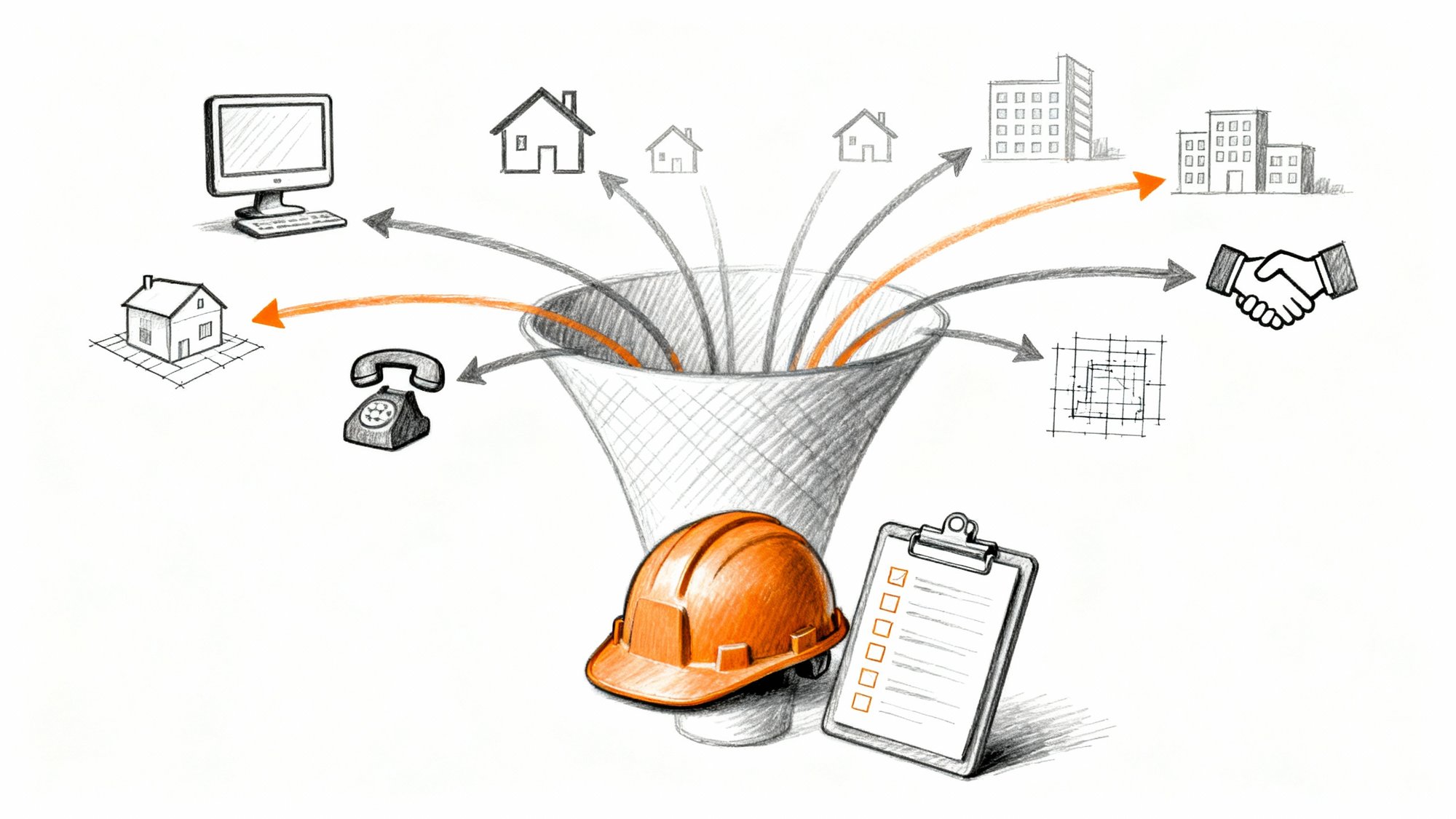
Your phone should be ringing with project inquiries, but instead, it's silent. You're doing great work, but finding new clients feels like pushing a boulder uphill.
Industry research consistently shows that leads are the lifeblood of any construction business. Without a steady pipeline, even the best contractors struggle. But here's the good news: homeowners and property developers are actively looking for contractors right now. The challenge isn't demand, it's connecting with those potential clients before your competitors do.
Today's customers don't flip through the Yellow Pages. They research online, read reviews obsessively, and expect instant responses. According to BrightLocal's 2025 Local Consumer Review Survey, the vast majority of consumers read online reviews before hiring local businesses, and according to Lead Connect research, 78% of people choose the first company that responds to their inquiry.
This guide breaks down 10 proven strategies to generate high-quality construction leads in 2025. Some require zero budget, others need small investments, but all of them work when implemented consistently.

How to Turn Your Network Into a Referral Machine#
Start with what you already have.
Your friends, family, former coworkers, and past clients represent your fastest path to new work. These people already trust you, which makes them incredibly valuable. Unlike cold leads from ads, referrals come with built-in credibility.
According to Buildern's 2026 Residential Construction Marketing Report, referrals and repeat clients contribute 20-25% of total leads for residential builders, with conversion rates that blow away other channels.
Key Insight: Research shows that referred leads convert 30% better than non-referred leads, demonstrating the power of active referral programs.
The math is simple: referrals cost almost nothing to acquire but convert at premium rates.
Make Referrals Automatic, Not Accidental#
Most contractors wait for referrals to happen naturally. Don't make that mistake.
Build a simple system:
① Ask at the perfect moment
Right after you finish a project and the homeowner is thrilled with the results, that's when you ask. The conversation is natural: "If you know anyone else looking to remodel, I'd love to help them too." You're not being pushy, you're genuinely offering to solve someone else's problem.
② Make it ridiculously easy
Give satisfied clients a few business cards to hand out. Better yet, send them a short email they can forward to friends: "Hi [Name], really enjoyed working on your deck. If you hear of anyone needing a reliable contractor, please send them my way. I'll take good care of them!"
③ Offer a thank-you incentive
People will refer you for free, but research on incentive programs shows that a small reward motivates even more referrals. Consider a $100 gift card, future discount, or cash bonus for any referral that turns into a project. Just make sure to tell people about it upfront.
④ Stay top of mind
Send past clients periodic check-ins every 6-12 months. Customer retention research shows that a simple "Hope all is well with the new addition, we're here if you need anything" keeps you memorable. When their neighbor asks for contractor recommendations six months later, your name pops up first.
Some construction businesses formalize this with a referral program: they create email templates, define rewards (5% of project value or set dollar amounts), and track everything in a spreadsheet. The key is consistency. Don't just ask once, build it into your close-out process for every job.
How to Get Repeat Business From Past Clients#
Your existing customers aren't just one-time transactions. They're potential sources of recurring revenue and extended networks.
Many construction companies discover that repeat customers eventually become a significant chunk of their lead pipeline. Someone who already knows your work quality is exponentially easier to sell than a cold prospect.
How to Generate More Repeat Projects#
→ Deliver exceptional service every single time
This sounds obvious, but it's the foundation. Quality work, professional communication, finishing on time and on budget. These fundamentals make clients want to hire you again.
→ Follow up after completion
A few weeks post-project, check in. Make sure everything is satisfactory and ask for feedback. This gesture shows you care, and it often reveals additional needs. Maybe they're now thinking about remodeling another room.
→ Suggest logical next steps
Use your expertise to identify follow-on opportunities. If you just built an addition, perhaps offer seasonal maintenance. If you finished a kitchen, mention that spring would be perfect for a deck refresh. These smaller jobs fill schedule gaps and keep the relationship alive.
→ Reward loyalty
Consider offering returning customers a 5-10% discount on their second project, or a free annual check-up. These perks make clients feel valued and give them a tangible reason to call you instead of shopping around.
→ Maintain periodic contact
Send seasonal greetings or helpful home tips via email or postcard. Around late fall, share "Winterizing Your Home: 5 Quick Tips." These touchpoints remind clients you exist and position you as a helpful resource, not just someone selling services.

Happy past clients also become your best marketers. When someone gushes about your work, politely ask if they'd write a quick review or serve as a reference. Those testimonials attract new prospects and reinforce to the original client why they should hire you again.
How to Dominate Local Search with Google Business Profile#
When someone in your area needs a contractor, their first move is usually a Google search.
According to industry research, over 55% of home service customers start with online research before ever scheduling an appointment. On mobile, this urgency intensifies: Google research shows that 78% of local mobile searches result in a purchase within 24 hours. That homeowner found a contractor online and called for a quote the same day.
If you're not showing up in those searches, you're invisible.
The key to local visibility is your Google Business Profile (formerly Google My Business). This free listing controls whether you appear in the Google Maps "local 3-pack," those three businesses Google highlights for searches like "general contractor near me." Landing in that top three can flood your phone with calls.
Optimize Your Profile for Maximum Leads#
① Complete every single section
Claim your business if you haven't already. Then fill out everything: address, service area, contact info, website, hours, detailed service description. Choose precise categories (General Contractor, Kitchen Remodeler, etc.) and add attributes like "Offers free estimates."
Google rewards complete, accurate profiles with higher rankings.
② Keep information current
Ensure your phone number works and someone actually answers. Update hours if they change. Use the holiday hours feature to show evening or weekend availability. An up-to-date profile signals you're an active, responsible business.
If you're worried about missing calls while you're on job sites, consider setting up a system that ensures every call gets answered professionally, even when you're busy with clients.
③ Upload compelling photos regularly
Pictures sell construction services. Upload high-quality before-and-after shots, project highlights, finished work. Photos build trust by proving your capabilities. Geotagged images (taken at job sites) can help with local SEO.
Aim to add new photos monthly. Google likes fresh content and active profiles.
④ Collect reviews aggressively
Reviews are everything. 86% of consumers read reviews for local businesses, and most won't even consider a contractor with low ratings or few reviews.
Critical for Success: Strong ratings don't just boost conversions, they improve your search ranking. More reviews plus higher ratings equals better visibility.
Make review collection part of your process. Ask every satisfied client for a Google review. Aim for at least 10-20 to start, then keep them coming. Respond to every review (good or bad) to show you're engaged.
⑤ Use posts and updates
Google lets you publish updates directly on your Business Profile. Use this feature weekly or a few times monthly. Share project photos, seasonal tips, or promotions.
Example: "Just finished a modern kitchen renovation in [Town] (see the transformation!)" or "3 Ways to Winter-Proof Your Home."
These posts make your profile look active. Some contractors treat their Google Business Profile like social media and see better rankings and more calls as a result.

Optimizing your Google listing might be the highest ROI activity you can do for lead generation. It's free and taps into people already searching for what you offer. A fully optimized profile, lots of photos, and glowing reviews will send you a steady stream of inbound phone calls.
How to Build a Website That Converts Visitors Into Leads#
Once potential clients find you online, they'll check out your website next.
Your site has one job: convince visitors to contact you. A strong website provides the information and confidence prospects need to take the next step. An outdated or sparse site sends them straight to a competitor.
Make Your Website a Lead-Generating Asset#
Design for credibility and mobile
First impressions matter. Use a clean, modern design with your own domain (YourCompanyName.com, not some templated URL). Display your business name, location, and professional logo prominently.
Include high-resolution photos of your work. Galleries or case studies work brilliantly because seeing is believing in construction.
Ensure the site loads fast and looks great on mobile devices. More than half of home service seekers use their phones to find providers. If your site breaks on mobile, you're losing leads.
Provide proof points and key information
At minimum, create pages for:
-
Services you offer
-
About Us (your story, team, credentials)
-
Contact page with form and phone number
List licenses, insurance, certifications. Showcase testimonials from happy clients. Include brief project case studies ("Historic Home Remodel: Challenges and Outcome"). Social proof and specific details help you stand out when homeowners compare websites.
Set up basic SEO
Search engine optimization helps your site rank in Google's organic results (separate from the Maps section). Optimize pages for keywords people actually search.
Include specific services and locations in your page titles and content. For example: "Kitchen Remodeling in Springfield, IL - [Your Company]" as a title. Create individual pages for key offerings (Kitchen Remodeling, Home Additions, Commercial Buildouts), each with local phrases like "serving clients throughout [County]."
Answer common questions with content
Consider adding a blog or resources section. Write articles like "How Much Does a Bathroom Remodel Cost?" or "5 Ways to Add Energy Efficiency in New Construction" or "Remodel vs Rebuild: How to Decide."
Publishing helpful content attracts people researching these topics. Some of them will convert to leads. It also demonstrates your expertise and helps with SEO. Content marketing significantly increases organic traffic and lead generation.
Focus on local angles too: "Remodeling Trends in [Your City] 2025." Google rewards fresh, relevant content. Each blog post is another opportunity to rank in searches.
Base your posts on real questions customers ask you. If one person asked, others are probably Googling it.
Include clear calls-to-action
Every page should guide visitors toward contacting you. Use phrases like "Request a Free Quote" or "Schedule a Consultation" with a button or form. Keep forms short (name, contact, brief message) and ensure your phone number is click-to-call on mobile.
A well-crafted website not only convinces prospects to trust you, it amplifies your other marketing. Referrals will check your site. Social media followers will visit. Ad clicks need somewhere to land. In all cases, you want that experience to build confidence and drive contact.
Think of your website as your 24/7 online showroom. Invest time in it and it will generate leads on autopilot in the long run.
How to Use Social Media to Showcase Projects and Engage Locals#
Many contractors underestimate social media, but it's a powerful (and mostly free) way to generate leads if used correctly.
You don't need to go viral on TikTok. The goal is simply to maintain a presence where your potential clients spend time and use these platforms as visual portfolios and relationship builders.
80% of home services businesses are active on Facebook, Instagram, or Nextdoor to connect with customers. Homeowners browse these platforms for inspiration and recommendations. Before someone hires you, they might look you up on social media to see examples of your work and how you interact.
A professional, active social presence can tip a wavering prospect in your favor.
Turn Social Media Into a Lead Source#
Choose the right platforms
Focus on where your target clients are. For residential contractors, Facebook and Instagram excel (rich visuals and community reach). YouTube works if you can create project walkthrough videos. For B2B or commercial projects, LinkedIn helps network with developers and architects. Nextdoor (the neighborhood app) is increasingly popular for local home service recommendations.
Share compelling visual content
Social media is your chance to show your work and personality. Post project photos regularly. Before-and-after shots of renovations are especially attention-grabbing and prove your capabilities.
Short videos work great too: quick tours of finished projects, timelapse builds, or you answering common questions on camera ("What's the difference between quartz and granite countertops?").
Content ideas:
-
Highlights of recent jobs (with permission, show that new kitchen or custom deck)
-
Client testimonials or happy homeowners with their finished project
-
Behind-the-scenes looks at work in progress or your team (people love seeing the craftsmanship)
-
Tips and knowledge (proving your expertise). A 1-minute video on how to choose a contractor or a post with seasonal home maintenance tips.
Post consistently and interact
You don't need to post daily. Even 2-3 times per week works if you're consistent. The key is regularity and responsiveness. Reply to comments or messages quickly. Treat your social like a conversation, not a billboard.
If someone asks a question on your Facebook page, answer it. If someone leaves a review or criticism, respond professionally. This public interaction shows prospective customers you're attentive and service-oriented.
Use local and project-specific tags
On Instagram, tag posts with location hashtags (#SeattleContractor, #DallasRemodel) and project type (#KitchenRemodel, #CustomHome). Tag the city or check in to the location. This helps new people find your work when browsing those topics.
On Facebook, participate in local community or homeowner groups if allowed. People often post asking for contractor recommendations there.
Build social proof
Encourage clients to follow your page and perhaps share a post about the project you did. A homeowner sharing "Look at my new bathroom remodel [Your Company] just finished!" and tagging you can generate inquiries from their friends.
Accumulate reviews on your Facebook page (if enabled) similar to Google. All of this serves as digital word-of-mouth.
While social media leads might not pour in overnight, over time this presence amplifies every other channel. Referrals will vet you on Facebook/Instagram, website visitors might click your social links to see recent activity, and locals who see your posts will remember you when they need a contractor.
It builds a recognizable brand in your community. And occasionally, you'll get direct messages like "I saw your work on Instagram, can you give me a quote on my kitchen?"
Stay professional on business pages. Show personality and humor, but avoid polarizing topics that could turn off potential clients. Aim to educate, inspire, and engage.
How to Partner with Complementary Businesses for Mutual Referrals#
No contractor operates in isolation. The construction industry is an ecosystem of specialists, creating prime opportunities to partner with other businesses that serve the same clients you want.
By forming the right alliances, you can get a consistent stream of high-quality leads with minimal marketing cost.
Think about adjacent trades or services that homeowners or builders turn to before, during, or after they might need you:
→ Real estate agents and property managers often hear about properties needing renovation or repair (before a sale or when new tenants arrive). Being the go-to contractor for a few local realtors can bring you steady referrals for fix-ups and remodels.
→ Architects and designers working on home designs or additions might recommend builders to execute plans. Interior designers handling renovations may need reliable contractors for structural modifications.
→ Specialty trade contractors like plumbers, electricians, and HVAC techs are in homes doing work and can pass your name along when they see bigger construction needs. If you're a general contractor, build a network with good subs. You send them work, they send you work.
→ Local suppliers and hardware stores sometimes connect homeowners with contractors. The pro desk at your local building supply might keep a list for customers who ask "know any builders?" Introduce yourself to managers at these shops.
Make Partnerships Actually Work#
Consider formalizing agreements. Sit down with a potential partner and outline how you can help each other. For example, a painter and a remodeling contractor might agree to send each other leads and work out a referral fee or percentage for any job won through the referral.
Clarity is key: decide if referrals are gentleman's agreements or if a commission is paid (flat fee per client or percentage of project value). Having this agreed in writing, even informally by email, ensures everyone feels comfortable promoting each other.
Tips for profitable partnerships:
Choose partners who offer different services to the same type of client. Don't partner with direct competitors. A kitchen remodeler and a landscape designer serve the same homeowners but won't steal each other's jobs.
Start by exchanging leads on small projects or doing a joint project to build trust. You need confidence that any referral you give will reflect well on you.
Maintain regular contact. Check in with partners monthly or quarterly. A quick call or coffee meeting keeps the relationship warm and top of mind. Share market info or upcoming opportunities.
Do co-marketing: Consider co-hosting a free seminar or workshop for homeowners ("Renovation 101" featuring a contractor plus an interior designer). This way you both draw prospects and share the leads. Or give each other shout-outs on social media or link to each other's websites.
One strong partnership can bring in dozens of extra leads per year without spending a dollar on advertising. These leads carry implicit trust because they come via recommendation.
Multiple studies on referral marketing show that structured referral partnerships yield significantly higher conversion rates versus firms without active referral programs.
Look around your professional community and ask: "Who can we team up with so we both win?" Networking in local builder associations, chambers of commerce, or Facebook groups for trades helps you find these allies.
Collaborate instead of compete, and everyone grows faster.

Where to Find Construction Leads: Best Lead Generation Platforms#
Beyond sourcing your own leads, you can tap into platforms that deliver leads directly to you.
Several established lead generation services and contractor directories connect you with homeowners and project planners actively seeking pros. By maintaining a presence on these sites, you can increase visibility and receive inquiries you might not have found otherwise.
Popular Construction Lead Platforms#
| Platform | Best For | How It Works |
|---|---|---|
| Angi (Angie's List) | Residential services | Directory with reviews, localized advertising and analytics |
| HomeAdvisor | High-volume residential | Collects homeowner project details, sends to multiple contractors (pay per lead) |
| Thumbtack | Smaller jobs, quick tasks | Consumers request quotes, pros send estimates |
| Houzz | Design-focused remodeling | Home design inspiration site with pro directory, attracts high-end clients |
| BuildZoom | Mid-to-large projects | Matches homeowners with licensed contractors, uses permit data |
| ConstructConnect | Commercial construction | Lists commercial projects out for bid (private and public jobs) |
| BuildingConnected | Subcontractors | Platform where GCs invite subs to bid on projects |
| Blue Book | Commercial/subcontracting | Long-standing directory for exposure to GCs seeking bids |
When using these platforms, focus on ones that fit your niche and budget. Each service has its costs and quirks. According to contractor marketing industry data, some platforms (like HomeAdvisor/Angi) charge per lead (roughly $20-$80+ depending on job type and location). Others like Blue Book work on subscription models ($150-$800 per month for higher ranking).
Maximize Value from Lead Services#
Respond immediately
These leads often go to multiple contractors. Being the first to call or reply hugely increases your win rate. On HomeAdvisor, contractors who respond first have the best chance to secure appointments. Speed matters.
Choose leads carefully
Good platforms let you filter by project type or location. Take advantage. It's better to niche down (only get leads for jobs above a certain dollar value, or only within your optimal service area). If you're booked solid for a month, pause or turn off leads you can't handle.
Paying only for what you want improves ROI.
Monitor ROI and reviews
Track how many leads convert to jobs and at what cost. If one platform consistently yields poor leads (people just price shopping with no intent to hire), adjust or drop it.
Manage your reputation on these platforms. Many allow clients to rate you, so provide good service and ask happy customers to submit reviews there.
Use dispute processes if available
Some services let you dispute bad leads (wrong number, not a real customer) and get credit. According to lead platform best practices, HomeAdvisor contractors can report "bad leads" to avoid being charged for duds. It's worth the few minutes whenever applicable.
Lead gen platforms can get a bad rap due to cost or competition, but many contractors successfully grow with them. The key is approaching them as one part of a broader strategy. Don't rely solely on bought leads. Combine them with organic methods.
When you use them, respond fast, track results, and refine what you accept. They can quickly fill your pipeline, especially as you ramp up.
How to Invest Strategically in Paid Advertising#
While organic methods are crucial, sometimes you need an extra boost. Smartly targeted ads can generate construction leads quickly by putting you in front of the right people at the right time.
Advertising can burn money fast if done haphazardly, though. The goal is to spend efficiently by focusing on channels and tactics proven to work for contractors.
Key Advertising Options#
Google Search Ads (PPC)
These text ads appear atop Google search results when someone searches for services ("bathroom remodel contractor"). You bid on keywords and pay per click.
They can get you prime visibility beyond the local 3-pack, especially in competitive cities. But costs can be high. Industry data shows that certain contractor keywords cost over $40 per click, particularly in competitive markets.
To make this work: target specific local keywords (and negative keywords to filter irrelevant clicks), use ad copy that pre-qualifies ("Licensed Contractor - Free Consultations"), and send clicks to a well-designed landing page. Set a daily budget you're comfortable with and monitor results closely.
Google Local Services Ads (LSA)
Also known as the "Google Guaranteed" program, LSAs are a newer pay-per-lead option. These appear above regular search ads with your business listing, Google reviews rating, and a "Google Guaranteed" badge (after Google vets your license and insurance).
You pay for each lead (call or message) that comes through the ad. LSAs can be extremely effective because they appear prominently and build instant trust with the badge. Cost per lead varies by region and trade but is often more predictable than open-ended PPC costs.
If available in your area/trade, definitely consider LSAs. Many contractors see great ROI.
Facebook & Instagram Ads
Social media ads let you target people by location, demographics, and interests. For example, run a Facebook ad targeting homeowners in a 10-mile radius, ages 30-65, who have interests in home improvement.
Facebook ads are interruption marketing (you're catching people scrolling, not actively searching), so the approach is different. Visuals are key. Show a stunning renovation before-and-after with a headline like "Dreaming of a New Kitchen? We Can Make It Happen (Get a Free Quote)."
These ads create awareness and capture people in early consideration stages. They're usually cheaper per click than Google but leads might be less urgent. Ensure you have a compelling offer (free consultation, limited-time discount) and an easy way for them to contact you.
Retargeting ads
A very cost-effective tactic is retargeting (remarketing): showing ads to people who already visited your website or social page. Since they've shown interest, a gentle reminder ad can bring them back.
Someone visits your site but doesn't call. Later they see an ad from you saying "Still need that home upgrade? Contact us for a no-obligation estimate." This keeps you in their mind as they decide.
Retargeting clicks are often cheaper and convert higher because the audience is warmer.
Make Advertising Budget-Efficient#
Track everything. Use unique tracking numbers or landing pages for ads so you know which calls came from where. If you're investing in ads, you should know your cost per lead and cost per actual project booked on each channel. This data guides you on where to spend more or cut back.
Focus on high-intent targeting. For search ads, use keywords indicating someone is ready to hire ("quote for kitchen remodel" vs. just "kitchen ideas"). For social, target life events like "recently moved" or homeowners likely to need renovations.
Don't overspend on broad terms. Bidding on "construction company" or "contractor" might blow your budget on people looking for jobs or irrelevant services. Use more specific terms (and add "negative keywords" for things you don't do).
Test and refine. Run A/B tests on ad copy and images. Try two versions of a Google ad, see which gets more conversions. Same on Facebook. Gradually improve your ads using these insights.
Mind your landing page. If you're paying for clicks, send them to a page designed to convert. It should be relevant to the ad. A bad landing page wastes your ad dollars.
One important mindset: Ads are accelerators, not magic bullets. They amplify what's already working in your marketing. If you have a solid website, strong reviews, and a good follow-up process, ads will drive more business. If those pieces are weak, ads might just result in leads slipping away.
Before ramping up ads, shore up your fundamentals. Then, when done right, advertising can reliably bring in leads on demand.
Many growing construction companies use a combination of Google Ads for immediate "job-ready" leads and Facebook for steady brand presence. Start with a modest budget, track results, and invest more in the channels that deliver profitable projects.
How to Use Outbound Marketing to Reach More Prospects#
Not all lead generation has to wait for the phone to ring. You can also go out and drum up leads proactively.
Especially if business is slow or you're looking to expand into new areas, a bit of hustling can still yield results in construction. This includes outbound marketing (you initiating contact) and traditional offline methods.
Outbound and Offline Strategies#
Targeted direct mail
Yes, snail mail still works for local services. Design a professional postcard or flyer advertising your services (highlight a specialty, include photos, a brief testimonial, and your contact info with a call-to-action like "Call for a free quote").
Mail it to a curated list. Target neighborhoods with older homes needing renovation, recently sold homes (new owners often plan upgrades), or specific demographics via a mailing list service.
Response rates for direct mail in home services can be modest (maybe 1-2%), but if you send 1,000 postcards and get 10-20 inquiries, that's a win if even a few convert to projects.
Job site signage and door hangers
When you're doing a project in a neighborhood, put up a yard sign (with permission). It's free advertising to all the neighbors who pass by.
After finishing a job, some contractors canvass the immediate vicinity with door hangers or flyers: "We just remodeled a kitchen on your street (if you'd like a quote for any home updates, give us a call!)" This capitalizes on the buzz of visible work in the area.
Cold calling or emailing (for commercial leads)
If you focus on commercial projects or subcontracting, you might need to reach out directly to companies or general contractors.
Create a list of target contacts: property management firms (for maintenance/renovation contracts), local businesses expanding facilities, or general contractors that might hire your specialty subcontracting.
Send a brief, personalized email introducing your services and how you can help, or make a polite phone call to the decision-maker. It's a numbers game. You might contact 50 and hear back from 5, but those 5 could turn into big accounts.
Just ensure you're not spamming. Professional outreach best practices emphasize the importance of researching each target and tailoring the message.
Persistence in follow-ups
When you do reach out or connect with a prospect, persistence pays. Don't be annoying, but don't be shy either.
If you gave a quote and didn't hear back, follow up in a few days: "Hi, just checking if you have any questions about the proposal (we're ready to schedule when you are)." According to sales follow-up research, if a property manager said "maybe next quarter," put a reminder to touch base in 3 months.
Many deals are won simply by outlasting others who give up after one try.
Local networking and events
Get involved in your community. Attend local home shows, real estate investor meetups, or Chamber of Commerce events. You could even host a free workshop at a local library or community center ("Planning a Home Addition 101").
These put you in front of people who may need your services or can refer you. Always have business cards or brochures handy. While networking isn't immediately scalable, the relationships and word-of-mouth from these activities can be invaluable (and often cost only your time).
Sponsorships and local presence
Consider sponsoring a little league team, school fundraiser, or community event in your town. You might get your banner up at the field or your logo in a program, increasing brand recognition.
It subtly builds trust ("I've heard of that company, they support our community"). When community members need a contractor, they're more likely to think of you. Ensure your company is listed in any local business directories or association listings.
The overarching theme with outbound and offline tactics is proactivity. Instead of waiting for leads to find you, you find them. This requires effort and a thicker skin (not everyone will be interested), but it can help you kickstart momentum.
It's especially useful for new businesses trying to get their name out or for entering a new market segment.
Combine outbound with earlier strategies. If you send postcards, you might see website traffic spikes, so ensure your site and Google profile are ready to impress those who investigate further. If you make a cold call, follow up with an email containing a link to your portfolio.
While modern digital marketing is crucial, these traditional methods still have a place in a well-rounded lead generation plan. A homeowner seeing your yard sign down the street, then a mailer from you, then finding you online covers multiple touchpoints and reinforces that you're an established player.
How to Answer Every Lead Instantly (Or Risk Losing It)#
Generating leads is only half the battle. What happens when a potential client actually reaches out to you?
Speed and responsiveness in handling inquiries can make or break your conversion rate. All the marketing in the world won't help if a lead calls or emails and gets crickets in return.
In 2025, we live in an on-demand world. People expect quick answers, and the first business to respond often wins the job.
The Speed-to-Lead Reality#
Consider these stats:
Critical Insight: 78% of customers choose the first company that responds to them. In home services, the contractor who calls back or replies to a message first sets the bar. Late responders often lose out entirely.
Leads go cold astonishingly fast. Harvard Business Review research shows that the average home service lead is 21 times more likely to convert if contacted within 5 minutes versus 30 minutes. Every minute counts. Waiting even an hour dramatically lowers your odds of ever reaching that person, let alone booking a job.
Many people won't leave a voicemail or wait for a call back at all. Approximately 80% of callers sent to voicemail hang up without leaving a message, often moving on to call the next contractor on their list.
If you don't answer the phone or respond promptly, you effectively lose 4 out of 5 potential opportunities right off the bat.
Put Systems in Place for Instant Response#
Answer the phone whenever possible
This sounds obvious, but many contractors miss calls when they're on job sites or after hours. If you have office staff or a receptionist, train them to treat every inbound call as high priority.
If you're owner-operated, consider using a call forwarding service or an answering service to catch calls when you're unavailable. Even a professional voicemail greeting that promises a quick call back is better than nothing (but remember, most won't leave a message, so live answer yields far better results).
Use technology for 24/7 response
You can employ solutions like AI-powered receptionists or live answering services to greet callers around the clock. These systems can answer common questions, gather the caller's info, and even book appointments on your behalf.
The benefit is no caller goes unanswered, even at 9pm on a Saturday. Given the urgency of many home service calls ("the roof is leaking now!"), this can be a lifesaver.
According to BIA/Kelsey research on home services, phone calls convert to 10-15 times more revenue than web leads on average. Capturing those calls live is hugely valuable.
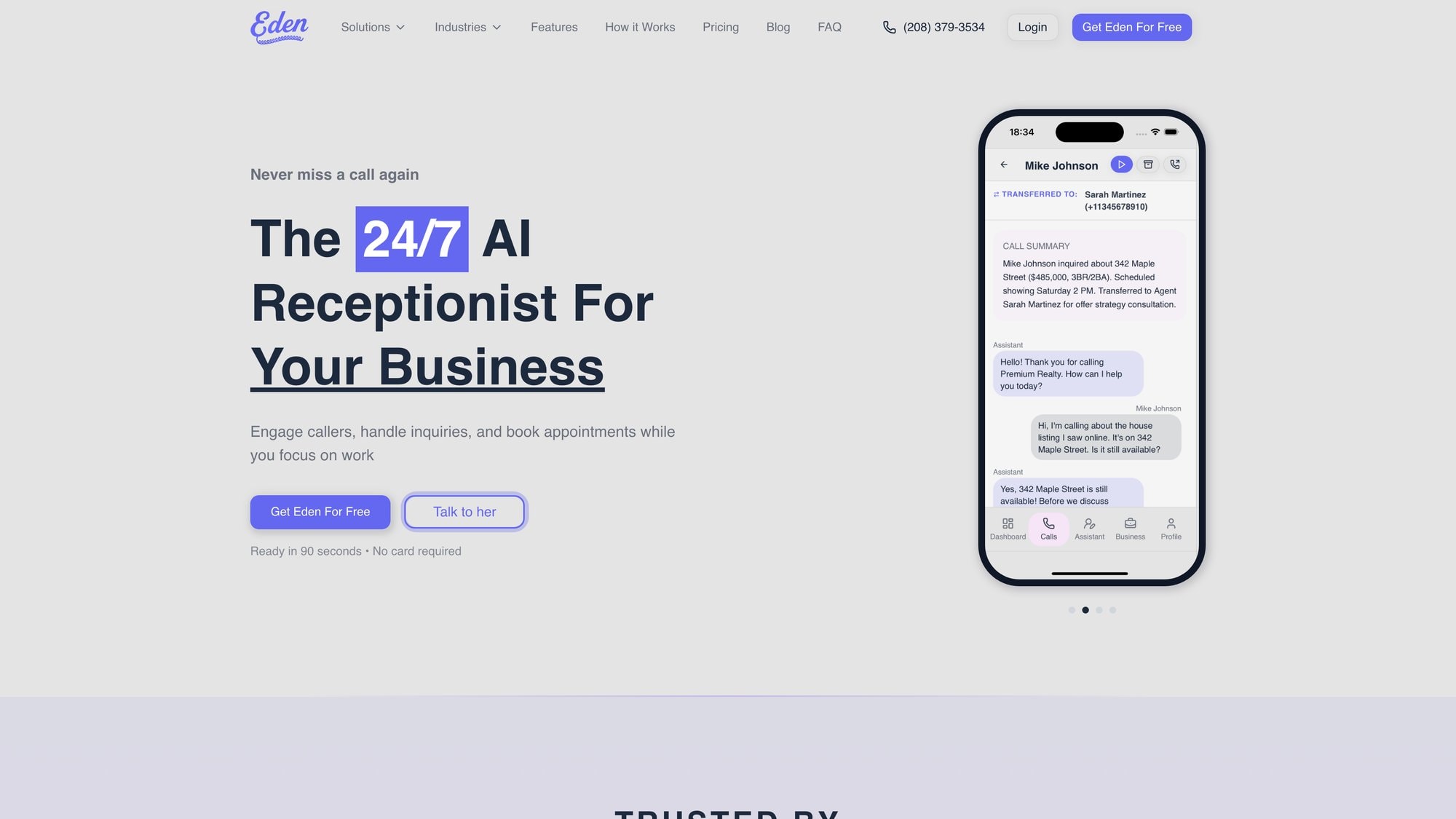
At Eden, we built our AI receptionist specifically for contractors and service businesses like yours. Eden answers every call 24/7, speaks naturally with callers, captures lead information, and can even book appointments directly into your calendar. No more missed calls while you're on a job site or after hours.
Think about it: according to industry calculations, if just one missed call per week represents a $5,000 project, you're losing $260,000 in potential revenue annually. Eden's pricing starts at $39/month, with bilingual support and spam filtering included. Your phone never goes to voicemail again.
Set up instant lead notifications
For digital leads (like form submissions on your website or leads from HomeAdvisor), set up notifications that ping your phone or email immediately. Better yet, use automation: if someone submits a form on your site, have an automatic email or text reply go out within 1 minute: "Thank you for contacting us! We've received your request and will call you shortly."
That instant acknowledgement can keep them from contacting the next contractor. Then follow up personally as soon as you can.
Prioritize lead callbacks in your routine
Make it a rule that any new inquiry is responded to before the end of that business day, ideally within an hour or two max (and within minutes if possible).
If you're out in the field all day, allocate specific times (midday, end of day) to stop and return calls/messages. It might feel interruptive, but remember: if you're the first to reply, you stand a much higher chance of winning the business.
Have a script for inbound calls
When you do connect with a lead, be prepared to efficiently guide the conversation. Answer their immediate questions, gather key information (scope of project, location, timeline, budget if possible). Express enthusiasm about their project and confirm next steps (schedule an on-site visit or send a quote).
A confident and helpful first conversation leaves a strong impression and can often secure the job on the spot, preventing them from shopping around further.
Don't Let Leads Go to Waste#
A leak in your follow-up process can cost you thousands in lost jobs. On the other hand, if you build a reputation for being responsive and reliable from the first moment, customers will take notice.
Some homeowners explicitly mention in reviews: "Company X was the only one who answered my call right away (so glad I chose them)."
Fast response is part of good service. In today's market, homeowners don't wait. If their need is urgent (burst pipe, broken HVAC), they will hire the first contractor who picks up and can come. Even for non-urgent projects, a slow response signals poor service and turns people off.
By responding quickly and professionally, you not only convert more leads, but you also start the relationship on the right foot.
If you find it challenging to manage this, explore tools or services to assist. There are CRMs that alert you to new leads, AI chatbots that handle initial website inquiries, and AI answering services like Eden that ensure every call is answered professionally.
It might cost a bit, but just one saved lead (that turns into a project) can pay for these tools many times over.

Construction Lead Generation: Frequently Asked Questions#
How much should I budget for lead generation?#
There's no one-size-fits-all answer, but a common guideline is allocating 5-10% of your revenue to marketing and lead generation. If you're a new business or in growth mode, you might invest 10-15%.
The key is tracking ROI. According to contractor marketing benchmarks, if spending $500 on Google Ads brings you a $10,000 project, that's a great return. Start small, measure results, and scale what works.
Many of the strategies we've covered (referrals, Google Business Profile, social media) cost only your time, making them accessible regardless of budget.
What's the best lead source for construction contractors?#
The "best" source varies by business type, location, and target market. Data consistently shows that referrals and repeat business offer the highest ROI and conversion rates, though.
According to referral marketing research, referral programs can significantly boost conversion rates compared to other channels.
That said, a diversified approach works best. Combine referrals with Google Business Profile optimization, a solid website, and strategic advertising to create multiple lead streams.
How long does it take to see results from lead generation?#
It depends on the tactic:
| Timeline | Tactics |
|---|---|
| Immediate (days to weeks) | Paid advertising, lead generation platforms, direct outreach |
| Short-term (weeks to months) | Google Business Profile optimization, networking, partnerships |
| Long-term (months to year+) | SEO and content marketing, social media, brand building |
The most successful contractors use a mix of immediate, short-term, and long-term strategies to ensure consistent lead flow while building sustainable growth.
Should I focus on residential or commercial leads?#
This depends on your expertise, resources, and preferences.
Residential projects typically offer:
-
Shorter sales cycles
-
More emotional decision-making (easier to sell on trust and rapport)
-
Steady volume of smaller projects
-
Higher customer interaction
Commercial projects typically offer:
-
Larger project values
-
Longer, more complex sales cycles
-
More formal bidding processes
-
Potential for repeat business with property managers and developers
Many contractors start residential to build cash flow and reputation, then expand into commercial for larger contracts. Choose based on your capabilities and market opportunities.
How do I qualify leads to avoid wasting time on tire-kickers?#
Good qualification saves you from chasing dead ends. Ask these questions early:
-
What's your timeline for starting this project?
-
Do you have a budget range in mind?
-
Have you worked with a contractor before?
-
Are you getting multiple quotes?
-
Is this your property or are you an agent/manager?
Red flags for low-quality leads include:
-
Unrealistic budget expectations
-
No clear timeline ("someday")
-
Just starting research with no commitment (typical early-stage lead behavior)
-
Asking only about price, not value or quality
It's okay to politely decline projects that aren't a good fit. Your time is valuable, and focusing on qualified leads improves your close rate and profitability.
What if I'm getting leads but not converting them?#
If leads are coming in but not converting to projects, the problem is usually in your sales process, not your marketing.
Common conversion killers:
| Problem | Solution |
|---|---|
| Slow follow-up | Respond within minutes to hours, never days |
| Poor communication | Explain value clearly, sound confident, listen actively |
| Price without value | Show why you're worth it (experience, quality, testimonials) |
| No urgency | Create reasons to decide now (limited availability, seasonal timing) |
Consider using a 24/7 answering service to ensure you never miss a call, then focus on refining your sales process: build rapport, understand needs, present solutions (not just prices), and follow up persistently but professionally.
How important are online reviews for construction leads?#
Extremely important. 86% of consumers read online reviews for local businesses before making a decision.
Reviews serve multiple purposes:
-
They build trust and credibility with strangers
-
They improve your Google Business Profile ranking
-
They provide social proof that influences purchasing decisions
-
They often contain specific details about your work that resonate with similar prospects
Aim for at least 10-20 Google reviews to start, then continuously collect them. A mix of 4.5-5 star ratings with detailed, authentic reviews is more credible than all perfect 5-star reviews.
Make review collection part of your process: ask every satisfied client, make it easy (send a direct link), and follow up if they haven't left one within a week or two.
How to Create a Lead Generation System That Works#
We've covered 10 proven strategies to get more construction leads in 2025. The most successful contractors don't rely on just one method (they build a systematic approach with multiple lead sources feeding a pipeline).
As you work through these strategies, remember:
Be consistent and patient. Many organic tactics (SEO, referrals, social media) take time to ramp up. Don't be discouraged if you don't see a flood of leads in week one. Consistent effort over a few months builds momentum, and suddenly your phone is ringing more than ever.
Monitor results and double down on what works. Use a simple spreadsheet or CRM to note where each lead came from and whether it converted. After a while, you'll see patterns. Maybe your Google Business Profile generates 10 calls a month and direct mail only 1. Or Facebook Ads brought lots of inquiries but mostly low-budget ones. Use this data to allocate your time and budget wisely.
Keep improving your customer experience. All the leads in the world won't matter if you get bad reviews or don't win jobs. Focus on delivering quality and communicating well. That in itself drives more referrals and repeat business. Build in feedback: if clients struggled to reach you at first, fix that (maybe the phone number was hard to find on your site).
Adapt to the market. The construction industry and consumer behaviors continue to evolve. If a new platform emerges, be ready to jump in early. If you notice competitors using video testimonials, consider doing the same. Always be learning.
By building a robust lead generation system, you can ensure your business thrives in any economic climate. When you have a pipeline filled with prospective projects, you get to be selective, focus on the best jobs, and negotiate from a position of strength.
It also means less stress (no more wondering where the next job will come from).
Mix and match these strategies to suit your business: nurture your network and past clients, shine online with a great Google profile and website, show off your work on social media, partner with those who can refer you, use lead services and targeted ads, and always follow up like your next project depends on it (because it often does).
With this comprehensive approach, you'll not only get more construction leads (you'll get better leads, and ultimately, more successful projects on your books).
Now roll up your sleeves and start putting these into action. The leads are out there. Go get them.
And remember: according to speed-to-lead research, when those calls start coming in, make sure someone answers them. Try Eden free for 7 days and never miss another opportunity.
Ready to Transform YourCustomer Experience?
Join hundreds of businesses using Eden AI to handle calls, book appointments, and provide 24/7 customer support.